
Uncategorized
War Against Ourselves
Jul
Galungan, one of the largest Hindu celebrations, honors the victory of dharma (kindness) over adharma (wickedness). The term “galungan” is taken from the ancient Javanese language, meaning “fighting”. While in Balinese it is known as “dungulan”, which means “victory”. Galungan is celebrated twice a year, or precisely once every six months, on every Buddha Kliwon Dungulan, according to the Balinese Saka calendar (Rabu Kliwon wuku Dungulan).
Before the Galungan celebration, Hindu people believe that Sang Kala Tiga, which are Sang Bhuta Galungan, Sang Bhuta Dungulan, and Sang Bhuta Amengkurat will come to earth as a manifestation of negative things. The main purpose of Galungan celebration is to defeat Sang Kala Tiga and achieve the dharma victory. Thus the war of dharma against adharma is a war within ourselves. Hindus will unite spiritual forces in order to obtain a clear mind. This clear mind is the manifest of dharma inside ourselves, whereas the chaotic mind is known as adharma. Aside from celebrating the victory of dharma over adharma, Galungan is also celebrated to commemorate the creation of the universe and everything inside it.
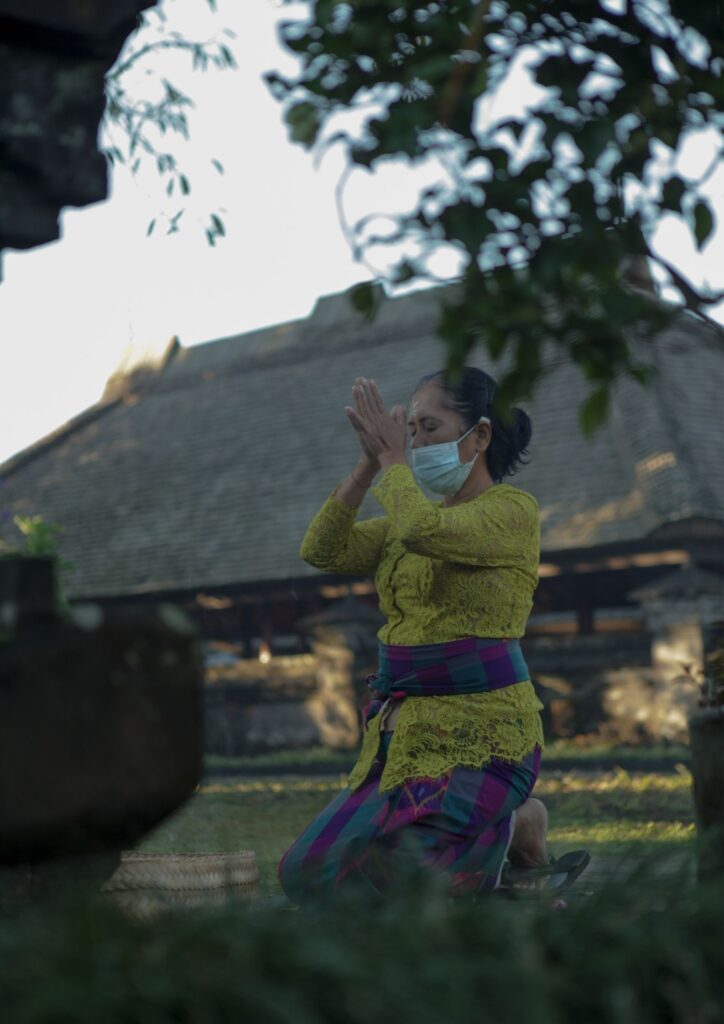
During the celebration, Hindus will perform a parade to pray at three significant temples: Pura Desa (the temple to worship Brahma, the God of creator), Pura Puseh (the temple to worship Vishnu, the God of preserver), and Pura Dalem (the temple to worship Shiva, the God of destroyer). Those Gods are also known as Dewa Trimurti. Following the ceremony, Hindus will assemble with their families to celebrate Galungan.
Ten days after the Galungan celebration, there is a Kuningan celebration that’s celebrated on Sabtu Kliwon wuku Kuningan. When in Galungan celebration, Hindus believe that the ancestral spirits come to earth. On the contrary, on Kuningan celebration, the ancestral spirits are believed to return to heaven after seeing their family on earth.
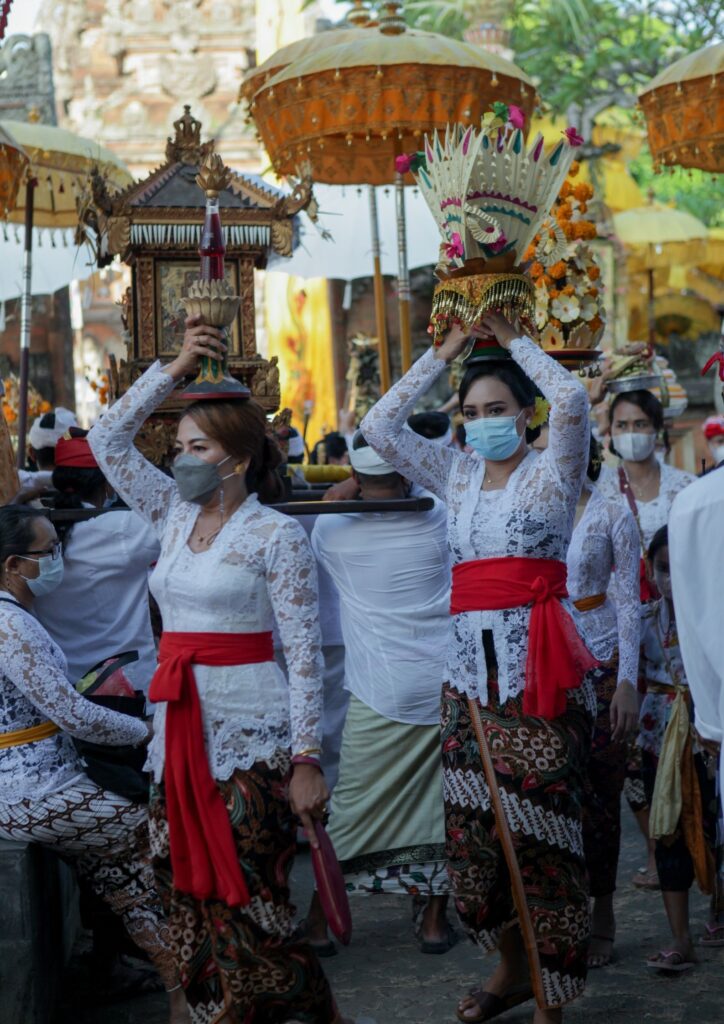
The core of the Kuningan ceremony is praying to the Gods, Bhatara, and Pitara for protection, direction, and safety. The festival of Kuningan honors Dewa Pitara, who is revered as the ancestor’s atman who has attained Swah Loka realm (the realm of holy souls).
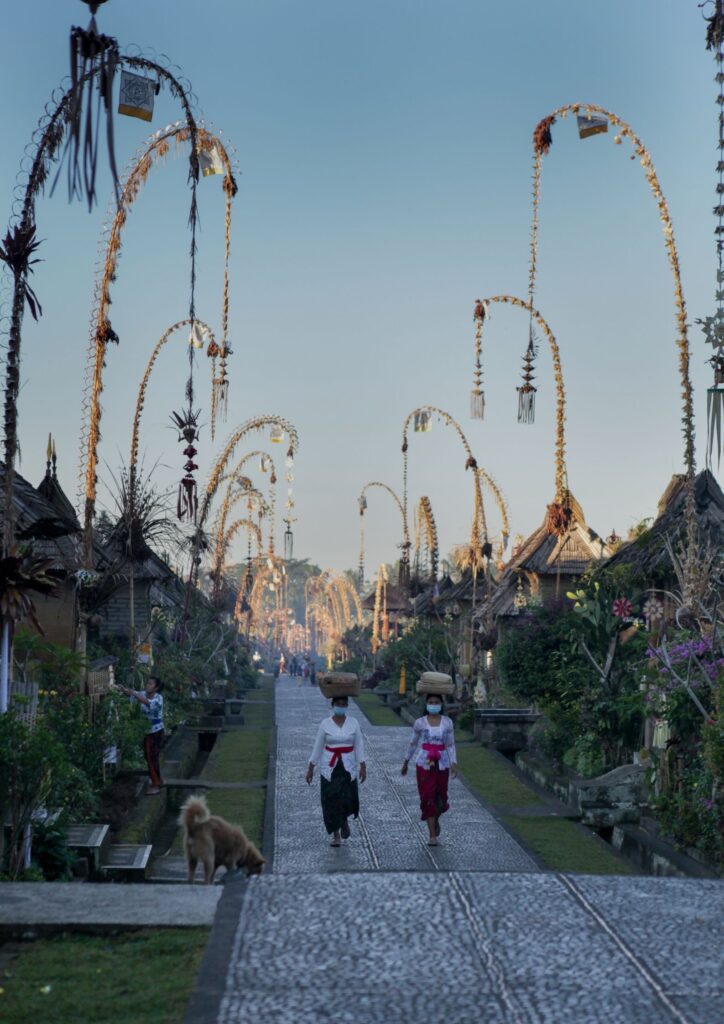
Hindus would place penjor along the side of the road for Galungan and Kuningan festivals. Penjor is a representation of Naga Besukih, the symbol of prosperity. Since Galungan and Kuningan are significant Hindu festivals that are celebrated with joy, light-colored kebaya—generally dominated by the color white, which stands for purity—is the predominant hue during these celebrations. Meanwhile, dark-colored kebaya is used for mournful rituals such as funerals.
