
Uncategorized
The Mythical Creature of Garuda in National Emblem
Oct
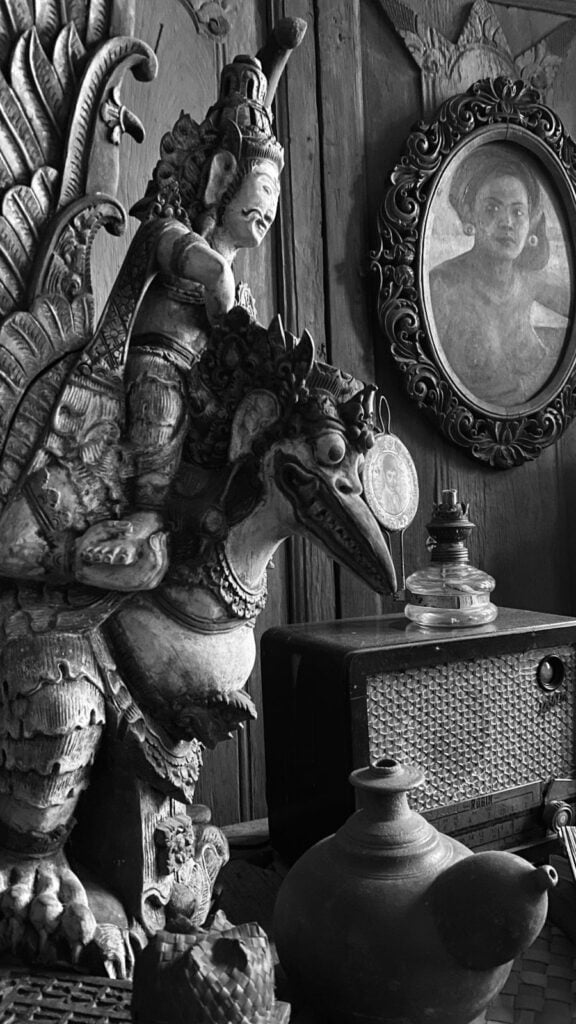
Garuda, the national emblem of Indonesia, is taken from the mythological story of Garuda Wisnu Kencana, which is the vehicle of Vishnu. This story is based on traditional Hindu beliefs from the past. As stated in Mahabharata, Garuda is a mythical creature of half human and a bird, hence it is not an actual animal.
The story begins with the existence of a wise rishi (holy person or poet who received revelations in Hinduism) named Rishi Kashyapa who had eight wives and many children as humans, giants and animals. The two wives of the rishi named Winata and Kadru constantly argue. One day, Kadru was given a thousand eggs by the rishi, which when they hatched all became snakes and dragons. Meanwhile, Winata was given two eggs, one of which was intentionally cracked in order for a son to hatch quickly. However, the bird that emerged was not yet complete because it lacked legs and thighs (anuruh in Balinese) so it was named Aruna.
Finally, the sole egg from Winata that was left to hatch naturally gave birth to a golden bird with a white face and red wings. Its body is human-like, yet its wings and beak resemble those of an eagle. The wings can block the sun due to its enormous size. He also possesses the strength and speed of the gods, which is why he was given the name Garuda.
Later, Winata and Kadru engaged in a wager to determine the color of Uchaiswara’s ponytail when it emerged from the ocean. At the time, no one in the realm of the gods was aware of Uchaiswara because it sprang from the ocean, but they were from the realm of the gods in the sky. Kadru estimated that Uchaiswara’s tail was black, but Winata thought it was white. Whoever doesn’t correctly predict the color of the ponytail loses and must live as a slave to the winner of the wager. Due to Kadru’s ingenious request that her offspring burn the horse’s tail into black, so Winata was forced to concede defeat and spend the rest of her life as a slave and carer for the dragons, Kadru’s children.
Through wisdom, Garuda realized that he must give thanks to Winata, his mother, for carrying him to term and bringing him into the world. Garuda then searches for his mother. He is aware that the mother is a slave nurse to snakes and dragons in the ocean. Not only that, Garuda also finally found out that his mother became a slave because he had been tricked so it enraged him and led to a battle with the dragons and the snakes. The battle was balanced, but caused damage everywhere. As soon as Garuda noticed this, he offered peace and asked the dragons and snakes, what conditions can release Winata from slavery. The snakes and dragons ask for tirta amerta (water of immortality) in the highest khayangan that makes whoever drinks it will live eternally forever. Garuda agrees to these conditions and then flies to khayangan.
In khayangan, Garuda meets Vishnu, the god who owns tirta amerta The two dragon guardians of the tirta amerta must first be defeated for Garuda to be able to seize the tirta amerta, therefore he fights fiercely to accomplish this. Seeing Garuda’s sincerity to get tirta amerta, Vishnu then invited Garuda to drink tirta amerta, but he refused. After that, Lord Vishnu presented tirta amerta, which was put in a kamandalu (a water container like a small teapot/jar) that was tied with weeds. Garuda was instructed to go back to Vishnu after completing his mission to set his mother free since Vishnu had been pleased to have Garuda serve as his ride.
Garuda said goodbye to his mother after accomplishing his task to set his mother free and left to meet Vishnu once more. Garuda fulfilled his pledge to rejoint Vishnu and take on the role of the deity’s mount. After completing his filial piety toward his mother, Garuda continues to show his devotion to Vishnu by giving his entire life over to the god in order to serve as the instrument to protect the world.
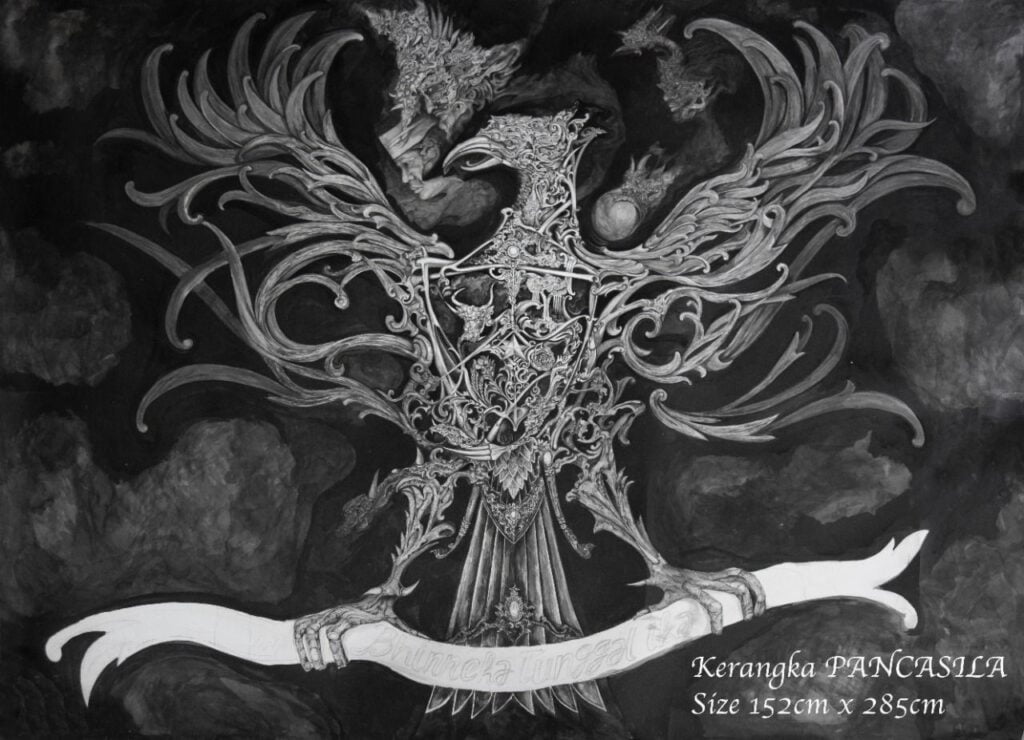
According to mythology, the Garuda is a symbol of someone who keeps their word, dependable, tough, and uphold justice. So that there are many depictions of the figure of Garuda in the media of sculpture and batik or other works of art to remind the Garuda.
Garuda Pancasila became the state emblem on February 15, 1950, according to Puput Virdianti’s book “Proses Penetapan Garuda Pancasila Sebagai Lambang Negara Indonesia Tahun 1949-1951.” Garuda was established by the Cabinet of the United States of Indonesia or the RIS Cabinet. When creating the groundwork for the nation, specifically Pancasila, Ir. Soekarno proposed the Garuda symbol because it mixes the mythological tale of the Garuda who pledged to free his mother, Winata, from the servitude of the dragons and snakes, and that promise was kept. The Indonesian people went through a similar fight to achieve independence in 1945, freeing themselves from the country’s centuries-long colonial servitude.
Additionally, the Garuda is utilized as Indonesia’s national emblem to show that it is a great nation and a strong country. The Garuda’s golden color represents majesty and glory. The beak, wings, tail, and claws of the garuda stand for power and strength in growth.
