
Uncategorized
Loro Blonyo: The Symbol of Family Harmony
Dec
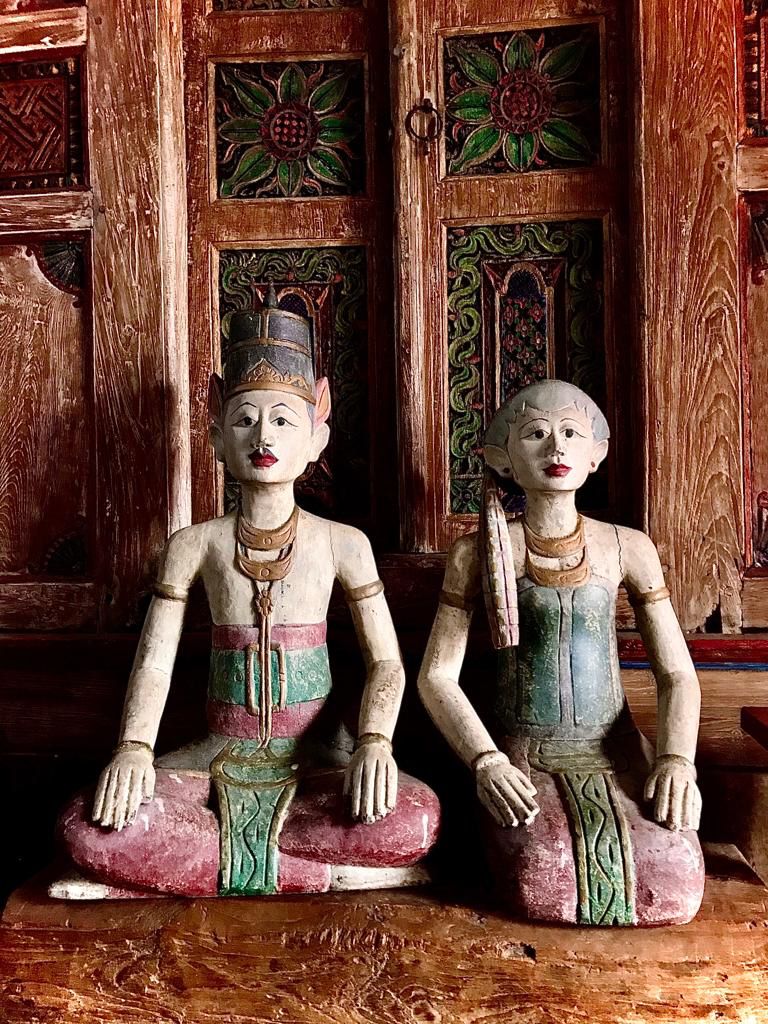
Loro Blonyo is a pair of statues, a female statue which is a symbol of Dewi (goddess) Sri or often known as the Goddess of Fertility and a male statue which is a symbol of Lord Vishnu. Loro Blonyo is taken from a Javanese legend about their love story. Starting from Batara Guru who felt lonely in heaven so that with his supernatural powers he created a beautiful woman named Retno Dumilah because of her beauty, Batara Guru fell in love with Retno Dumilah who was later called Dewi Sri.
Dewi Sri placed three tough requirements on Dewa Batara since she did not love him. Ultimately, Dewi Sri’s demands were not met by Batara Guru. However, Dewa Batara persisted and believed that other gods were interfering, so Batara Guru sent Kala Gumarang to investigate Dewi Sri. While investigating Dewi Sri, Kala Gumarang was even fascinated and fell in love with Dewi Sri. In the end, Dewi Sri got angry and cursed Kala Gumarang to turn into a pig. However, the pig still chased Dewi Sri all the way to the world.
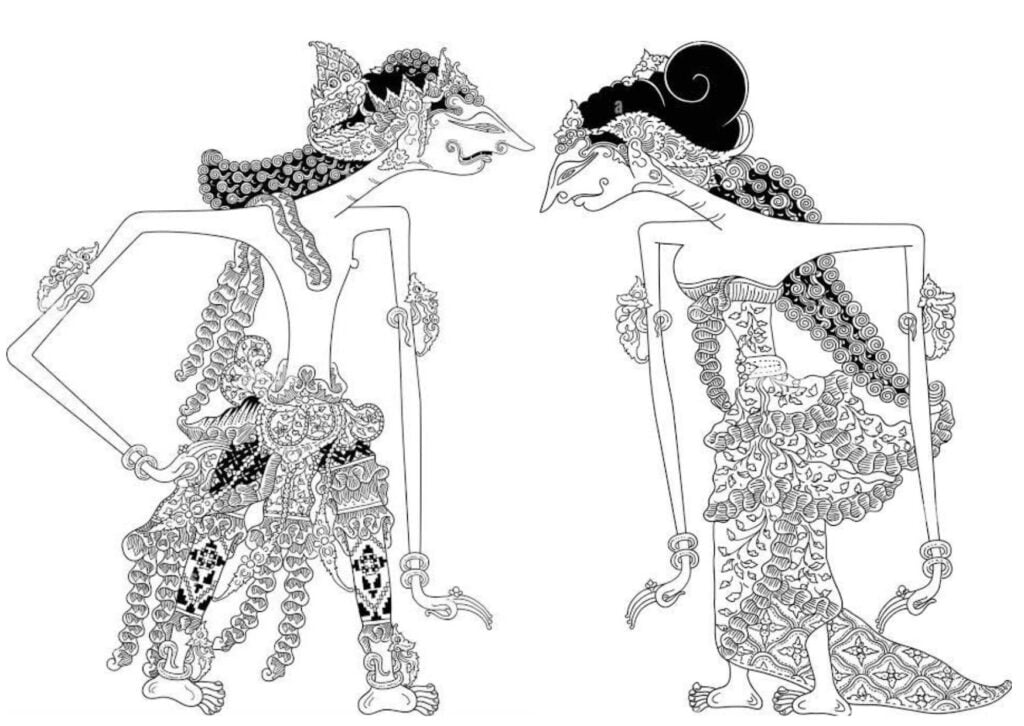
Rice and other plants grew in the area where Dewi Sri lived, and they radiated bright light. When Prabu Mangkukuhan from the Medang Kingdom noticed the light, he grew inquisitive and sought for the light’s source. It turned out that the sparkling light was emanating from the figure of a beautiful woman who was none other than Dewi Sri. Prabu Mengkukuhan or also known as Raden Sadana who is the embodiment of Lord Vishnu fell in love and proposed to Dewi Sri. Eventually, Dewi Sri and Lord Vishnu got married.
This couple’s harmony led to the creation of a statue that resembled them and was eventually given the name Loro Blonyo. The phrase “Loro Blonyo” simply means “prosperity and offspring” or it can also be called “prosperity and continuity.”
The male figure of the Loro Blonyo statue is dressed in a kanigara kuluk, a black headdress for kings with yellow stripes distributed both vertically and radially. He also has a stagen fastened to his waist and a belt around it. The hands of the statue are positioned over the navel, and the legs are crossed to reveal the soles of the feet. Meanwhile on the statue of a woman, the dress worn is a kemben with an ornament on the forehead. A crown at the top and the addition of the sunduk mentul hair accessory complete the contour of the bun. Her feet are in a respectful stance, revealing the right and left palms and fingers. Loro Blonyo statue is said to have existed since the days of the Mataram Kingdom in 1476.
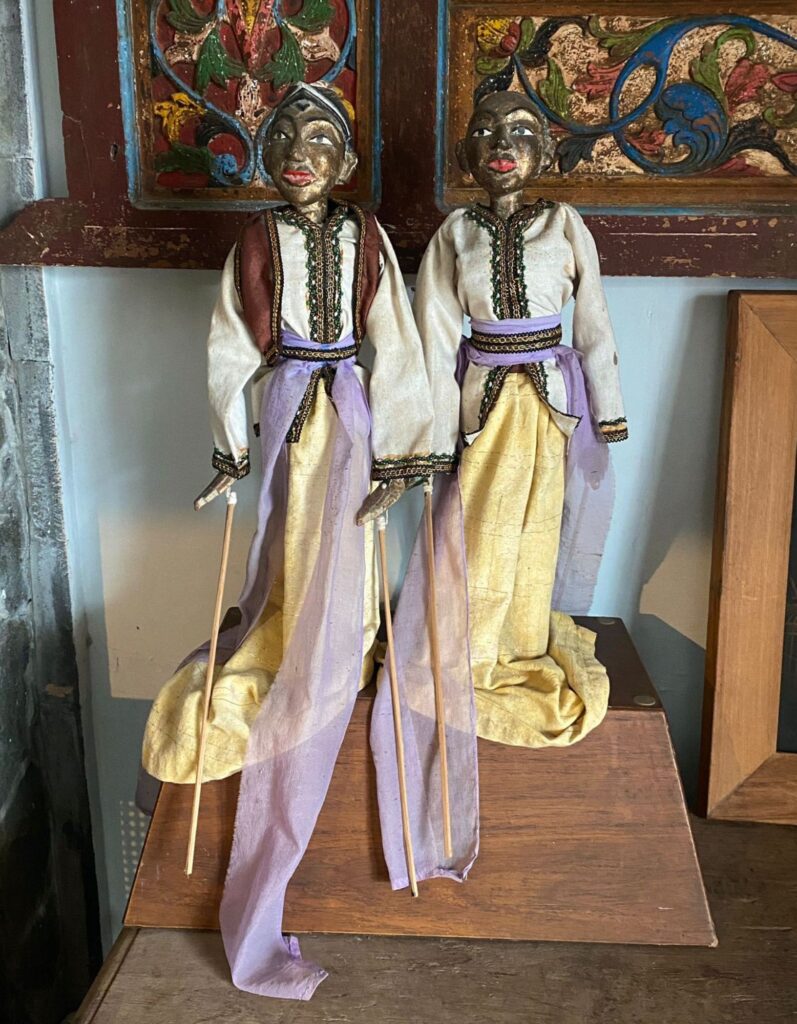
Meanwhile, according to Djoko Diyanto, archeology professor of Gajah Mada University, the Loro Blonyo statue is a symbol of hope. Its presence in the home can foster a good atmosphere that helps to maintain a peaceful home environment. The Loro Blonyo statue serves as a reminder of a husband and wife’s private space and represents the established family of the home’s owner.
Currently, the statue of Loro Blonyo is used as a symbol of household harmony. This statue is one of the mandatory decorations in Javanese traditional houses. There are numerous other designs and shapes of this statue in the modern era, some of which are made similarly to wayang golek. In addition to wood carvings, there are other shapes made of ceramic and copper that feature contemporary clothing and makeup.
