
Uncategorized
A Thousand Prohibitions that Create Universal Harmony
Jan
The island of Java is renowned for making faster progress with infrastructure development than the other islands. On this island, we hardly find isolated tribes. Almost all of those who live on this island have assimilated into modernity. However, have you ever imagined living close to a metropolitan area without access to electricity, transportation, technology, and even education? For some people, it may be difficult to imagine. In contrast to the Baduy tribe, this ethnic Sundanese tribe actually chooses to live with limitations in order to preserve the environment and the natural surroundings.
The Baduy tribe lives in the Kendeng Mountain range, Lebak, Banten. The location is only about 150 km away from the capital city of Jakarta. As one of the tribes that inhabit the island of Java, the Baduy tribe offers experiences that are difficult to obtain in other areas because of the persistence of its people in carrying out traditions. The Baduy tribe is known for the prohibitions that must be followed by its citizens, ranging from restrictions on the color of clothing, to the prohibition of marrying people outside the Baduy tribe, making the culture of the Baduy tribe remain sustainable until the 21st century. When the other tribes of Indonesia began to adapt to foreign cultures, the Baduy tribe steadfastly rejected modernization.
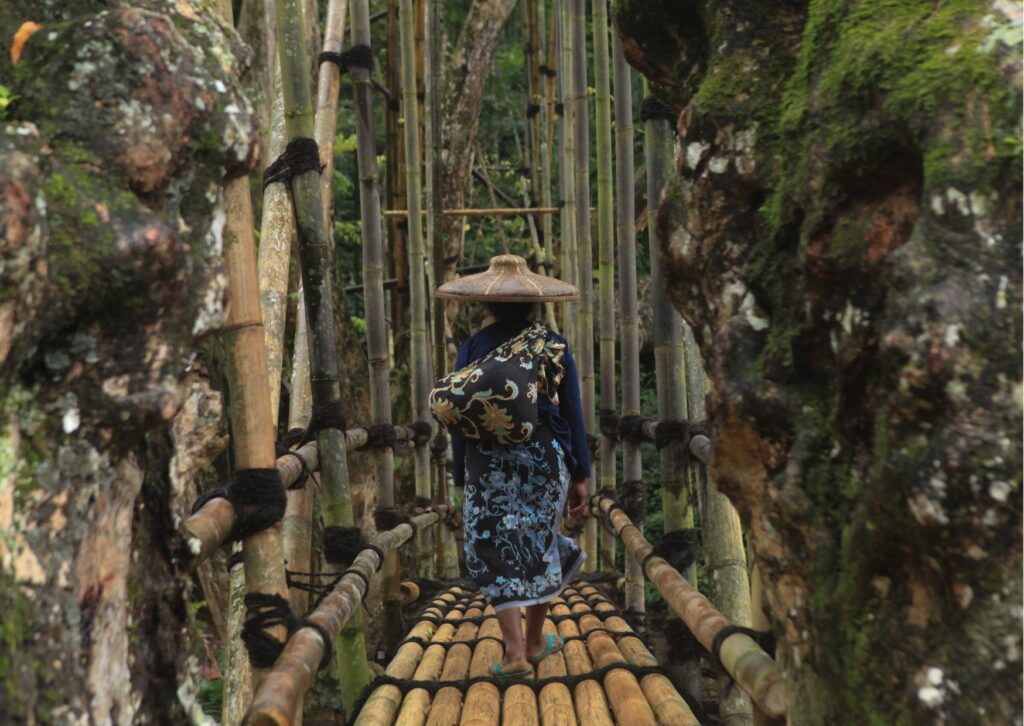
The Baduy people call themselves Urang Kenekes, the term “Baduy” is more widely used by outsiders, particularly tourists. Baduy comes from the name given by the Dutch researchers who saw their resemblance to the Badolawi tribe in the Middle East. The Baduy tribe consists of two parts which are Baduy Dalam and Baduy Luar. Baduy Dalam are distinguished by their plain white and black clothing, while the Baduy Luar wears predominantly black clothing combined with the typical blue batik motifs of Baduy. Both of them also have different ways of life, Baduy Luar have been freed to accept outside culture while Baduy Dalam vehemently reject penetration of the outside world.
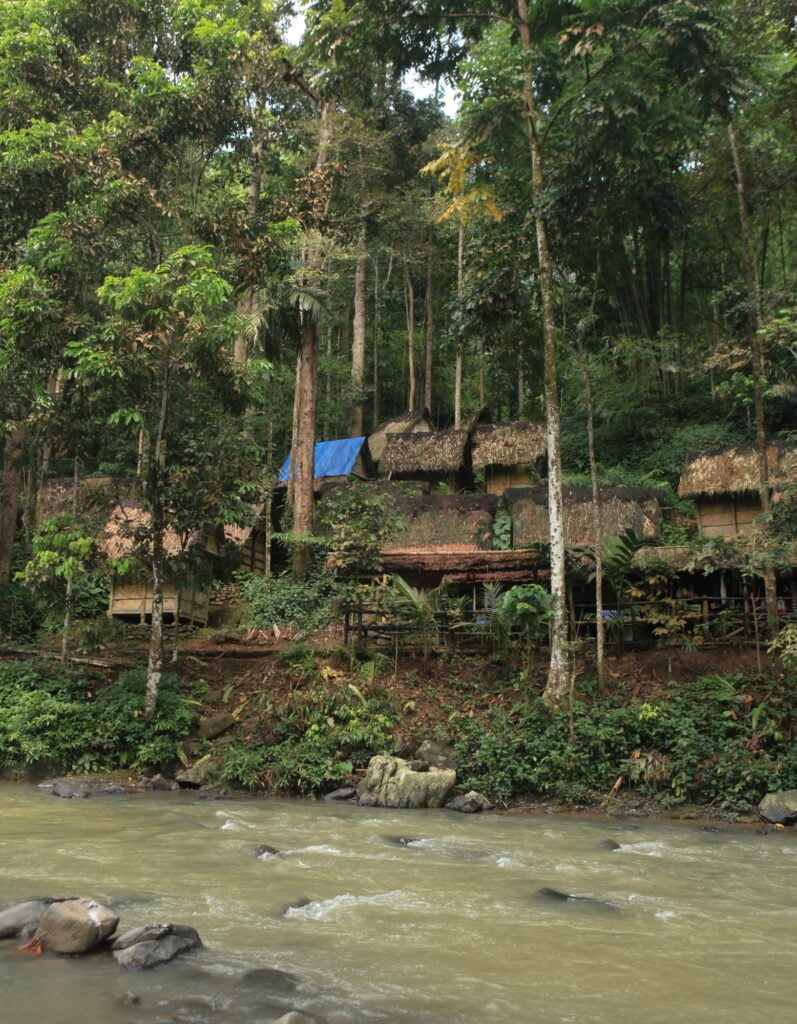
The law that regulates the way of life for Baduy people is called Pikukuh Bedouin. The prohibitions in the Bedouin Pikukuh are made by considering activities that can hinder the preservation of nature. One of the rules in the Bedouin Pikukuh is that it is forbidden to use chemicals (soap, shampoo, toothpaste) for bathing and washing purposes. The Baduy people carry out self-cleaning activities in a nearby river. The use of chemicals is prohibited because it will pollute the water in the river. The Baduy tribe is also prohibited from changing the direction of the water flow, such as making a pond. Not all animals are allowed to be kept. The Baduy tribe prohibits livestock such as cows and goats because they are considered to disrupt the ecosystem. Animals that are allowed to be kept are only chicken, fish, dog and cat.
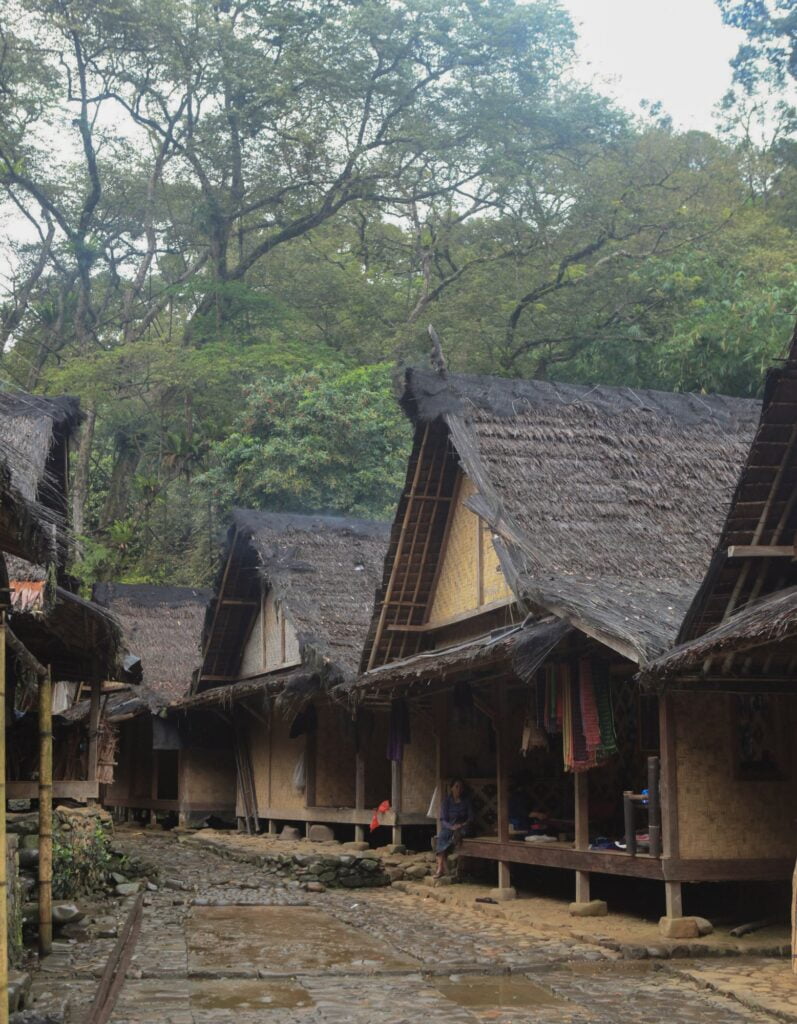
During the construction of a house, the Baduy tribe is not permitted to dig the ground. Therefore, not all of the house’s pillars are the same height. The Baduy tribe’s traditional house called Sulah Nyanda was built without nails. It was built by using natural materials because material’s building that are not from the natural surroundings are also prohibited. The Baduy tribe holds the principle that everything related to nature is left as it should be to maintain its sustainability.
In the trading, Baduy Dalam do not recognize currency, they exclusively practice the barter system. On the other hand, Baduy Luar has accepted money as a currency. Baduy Dalam strongly opposes technology. Visitors that are visiting Baduy Dalam are prohibited from operating electronic devices such as cell phones and cameras. In contrast, Baduy Luar is willing to accept the technology.
The Baduy people conceive to the Sunda Wiwitan belief, although some have converted to Islam. The Baduy Tribe is commonly using Sundanese Baduy dialect. However, most of them are fluent in Bahasa Indonesia. The Baduy people are illiterate, so the dissemination of information is only through oral language without any text. They also are still prohibited from receiving education. Nonetheless, the children of the Baduy Tribe naturally pick up new skills from their interactions with outsiders. They are also good at arithmetic and fluent in Bahasa Indonesia even though they do not receive a formal education.
Another uniqueness of the Baduy tribe is that they kept the chieftain’s identity a secret. Other tribes are generally allowed visitors to meet the chieftains just for asking permission or welcoming visitors. But It is different from the Baduy Tribe which prohibits visitors from meeting with the chief. The head of the tribe called Pu’un is someone who can only be met by certain people. The Pu’un are considered to be descendants of Batara and live like ordinary citizens, but are kept secret from outsiders.
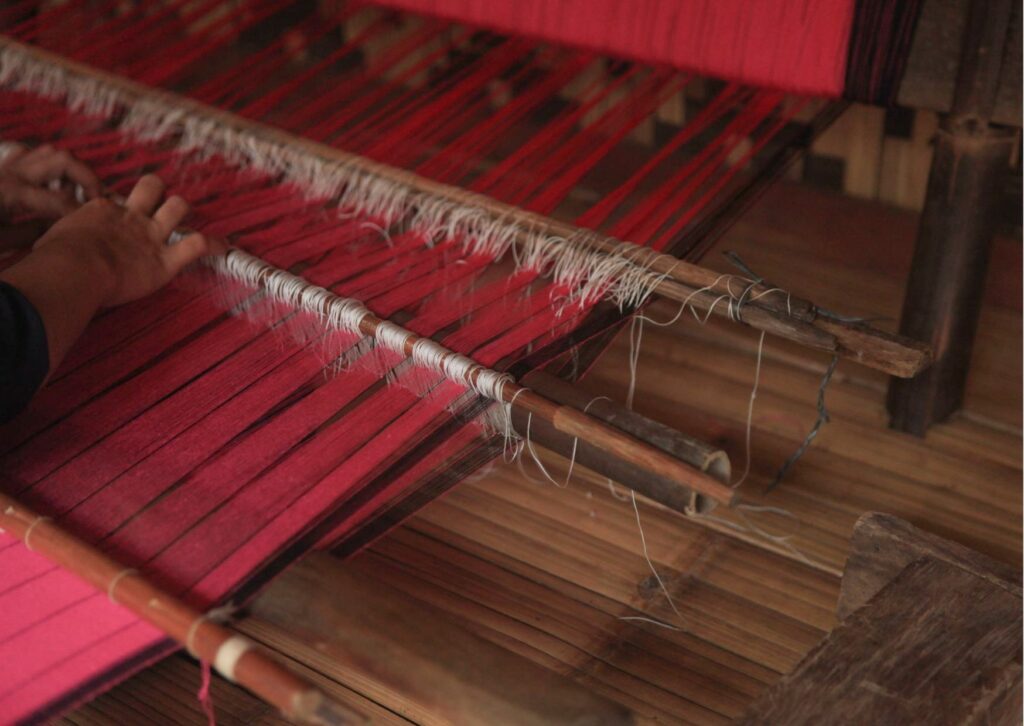
The livelihood of the Baduy people is based on farming. They sell their agricultural products outside the Baduy area even to the nearest large city like Jakarta. In big cities, sometimes you will find Baduy people walking barefoot to sell agricultural products such as honey and palm sugar. Additionally, Baduy women are also good at weaving apart from working in the fields. There is a myth related to weaving where men are supposedly not allowed to touch the loom. If this happens, the man will behave like a woman.
Strict rules make the Baduy people stay in their village even as adults. Young people who are ready to find a job are not interested in moving to urban areas. Due to this phenomena, the Baduy Tribe’s population has not declined; both young people and the old continue to remain in the same village. Unlike other traditional villages that are already experiencing a youth crisis, the Baduy Tribe’s citizens are full of young blood. Youth crisis happens because most of the other tribes’ youth migrate to the city to study or find work.
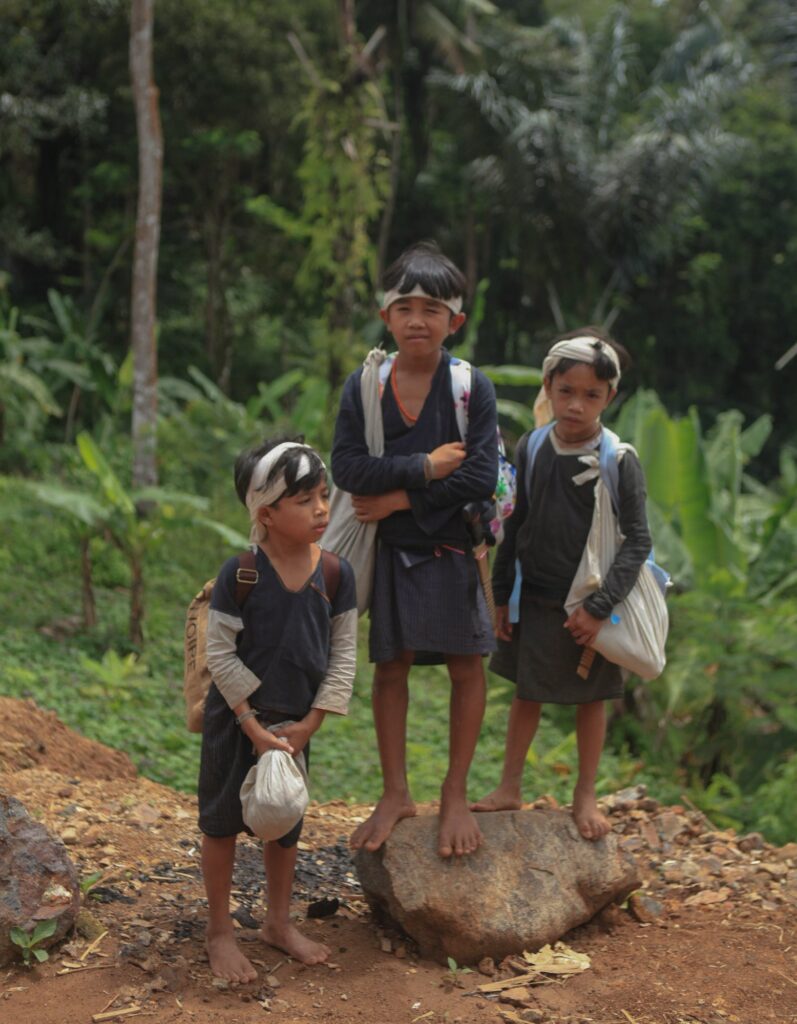
Baduy Dalam live in three villages which are called Cikeusik, Cikertawa and Cibeo. In contrast, Baduy Luar occupies 57 villages. Both the Baduy Dalam and Baduy Luar are welcoming any visitors. Although, they make limited access for international visitors. Only the Baduy Luar is open to all visitors, while the Baduy Dalam is still prohibited for international visitors. The Baduy Luar gives international visitors the opportunity to stay for one night, while local tourists are not restricted.
The Baduy tribe’s life seems difficult for modern society. However, the Baduy people carry out their habits in simplicity without feeling a burden. Simplicity is an important value that is attached to the Baduy Tribe because harmonization with the surrounding environment will be achieved if life is done in moderation. As a result, the Baduy Tribe lives in abundance even though they reject things that are considered very vital in the 21st century, such as electricity.
Bibliography
Setyaningrum, P. (ed.). (2022, August 25). Mengenal Suku Baduy, dari asal usul hingga tradisi. Kompas. https://regional.kompas.com/read/2022/08/25/211002178/mengenal-suku-baduy-dari-asal-usul-hingga-tradisi?page=all
Riky. (n.d.). Suku Baduy, bersinergi dengan alam menjaga aturan adat. Indonesia Kaya. https://indonesiakaya.com/pustaka-indonesia/suku-baduy-bersinergi-dengan-alam-menjaga-aturan-adat/
Admin BPK Wil IX. (2019, March 29). Kain tenun masyarakat Baduy. Indonesiana. https://kebudayaan.kemdikbud.go.id/bpnbjabar/kain-tenun-masyarakat-baduy/
