
Uncategorized
Bali Aga: A Living Tradition Beyond Majapahit Shadow
Mar
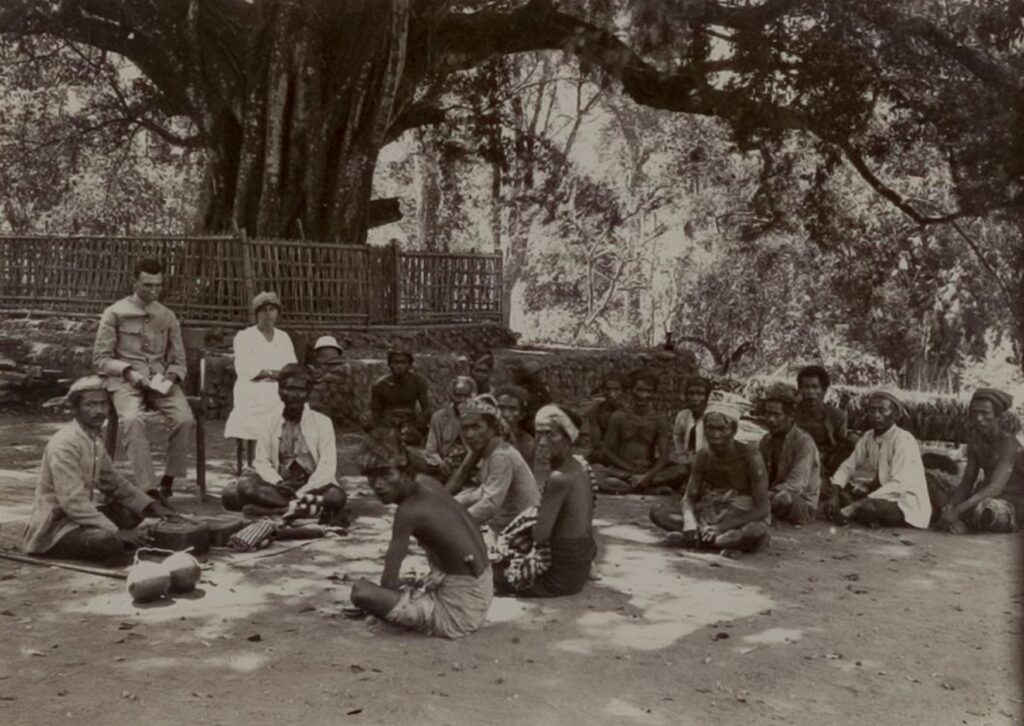
Bali can’t be separated from its cultural and religious identity. Bali becomes unique due to the central role of these aspects. The culture that dominates Bali is rooted in the Majapahit Kingdom in East Java. On the contrary, the original Balinese culture that had existed before the presence of the Majapahit people in Bali is still preserved by the Bali Aga or Bali Mula community. They were the people who had inhabited Bali before the arrival of Majapahit. Until this day, they practice a way of life that is different from that of the majority of Balinese people. This causes the society of Bali to be divided into Bali Aga/Bali Mula and Bali Majapahit. However, Bali Mula can also be categorized as the earlier indigenous population of Bali than Bali Aga.
The history of the Balinese people is linked to the conquest of Majapahit in 1343. A Javanese named Kresna Kapakisan was appointed as a king and started the Kapakisan Dynasty in Bali. Bali began to be exposed to Majapahit culture. When Majapahit collapsed in the 16th century, many Majapahit nobles and priests fled to Bali. This caused the Javanese cultural elements to dominate Bali, leading to changes in the social and religious systems in Bali.
In anthropological terms, Bali Aga is categorized as a community that has been less influenced by Javanese Hindu culture. The word “aga” means “mountain,” in accordance with their settlements, which are generally located in mountainous areas. Bali Aga became a separate group and practiced their own cultures. These cultures are often referred to as pre-Hindu Balinese culture. Nonetheless, Roelof Goris suggests that the Bali Aga be called non-Javanese Hindu Bali because their ritual practices are not influenced by the religion of the priests and nobles who had fled from Majapahit.
The Bali Aga people have a belief system oriented toward ancestor worship and the power of nature. R. van Eck links Bali Aga ritual practices with Polynesian paganism and animism. Meanwhile, J. Brandes categorizes Bali Aga as those who do not recognize the authority of Brahmin priests or the power of toya tirta (holy water). Bali Aga people do not adhere to Hindu Dharma like the Balinese in general. Bali Aga uses the Balinese Hindu religious system, but with different functions and purposes. For example, in Trunyan, they worship Ratu Sakti Pancering Jagat, who is the supreme God and the ancestor of the Trunyan people. Bali Aga people also do not celebrate Balinese Hindu religious ceremonies such as Galungan, Kuningan, and Nyepi.

The ritual leader of Bali Aga is called Balian Desa, who is chosen by unseen power (niskala). Those who are chosen to be the Balian Desa cannot refuse the role, even if they feel unprepared or unworthy to carry out the task. Refusing the will of niskala can lead to misfortune. Bali Aga also do not consult a Sulinggih during rituals. They do not use Sanskrit mantras, but local mantras called sesapa that are recited by the Balian Desa.
Bali Aga people do not use caste in their names. This system of hiding caste names is known as nyineb wangsa. Bali Aga names might sound like those of ordinary people, but they may actually belong to the pragusti or warrior caste. Bali Aga people live in traditional villages spread across the northern and eastern regions of Bali. These villages maintain their original traditions and are relatively unaffected by Majapahit influences. Meanwhile, villages that embrace Majapahit culture are called Bali Apanaga villages and are mostly located in the southern part of Bali.
Currently, there are 62 Bali Aga villages spread across seven regencies in Bali. Kintamani has the largest number of Bali Aga villages, with around 19 villages. Tenganan Village in Karangasem has become a popular destination for tourists who want to experience Bali Aga life. Established in the 11th century, Tenganan Village is one of the oldest villages in Bali. Each Bali Aga village has its own unique traditions and rules, making them different from one another.
Bali Aga villages have both written and unwritten rules. These written rules are summarized in the awig-awig (customary laws) compiled by the entire village community. Bali Aga also adopts the ulu apad system for traditional governance. Bali Aga villages have a spatial design that extends from north to south (linear). This spatial design aligns with the concept of the macrocosm and microcosm. It is also related to the mountain (kaja), which refers to Mount Agung, and the sea (kelod), which refers to the sea in the south of Bali. In this concept, the mountain is considered a sacred zone; thus, holy places like village temples are located on the northern side. On the contrary, the south is considered unclean and becomes the location of cemeteries and public baths.
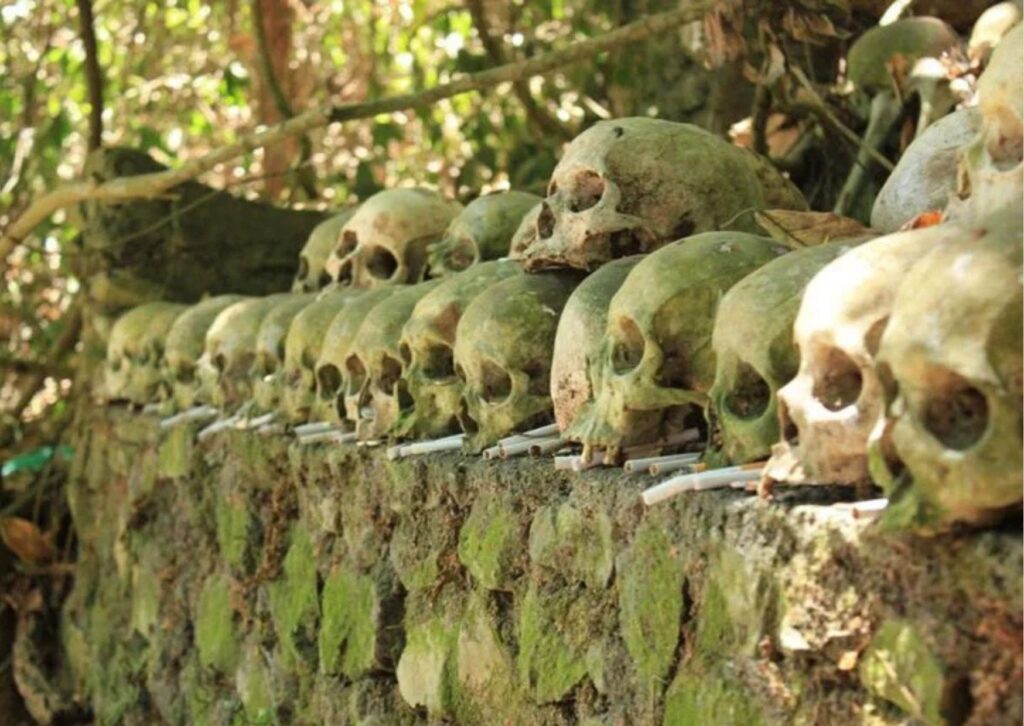
Some Bali Aga villages still practice megalithic traditions. For instance, in burial ceremonies, Bali Aga don’t practice cremation but rather burial. This burial ceremony is known as biye tanem, and one of the villages that still practices it is Trunyan. In Trunyan, the body of the deceased is simply placed on the ground and left as it is. This type of burial is part of the prehistoric legacy.
In terms of marriage, Bali Aga villages such as Tenganan also practice an endogamous system, requiring marriages to be conducted within one’s own community. This ensures that Tenganan is inhabited only by indigenous Bali Aga residents, and no one from outside the village can become a resident. However, Tenganan people can still marry someone from outside the village as long as they are willing to leave the village and are no longer considered residents. This prevents them from participating in village ceremonies. Bali Aga villages also forbid their residents from selling their land to outsiders.

Every Bali Aga village holds an annual festival called ngusaba desa. As a popular tourist destination, Tenganan Village commemorates the victory of the god Indra through the Perang Pandan (Pandan War). Timbrah Village in Karangasem celebrates guling siu by offering hundreds of roast pigs as gratitude to Sang Hyang Widhi Wasa (God Almighty). The Bali Aga community in Kintamani also celebrates the harvest festival every year. Many Bali Aga traditional villages are now being developed as tourist villages. The existence of these tourist villages supports the local economy. However, uncontrolled development can also threaten the authenticity of traditional villages.
Bibliography
Aridiantari, P., Lasmawan, I., & Suastika, I. (2020). Eksistensi tradisi dan budaya masyarakat Bali Aga pada era globalisasi di Desa Trunyan. Ganesha Civic Education Journal, 2(2), 67-80. https://doi.org/10.23887/gancej.v2i2.345
Covarrubias, M. (2018). Island of Bali. London: Routledge.
Hauser-Schäublin, B. (2004). “Bali Aga” and Islam: Ethnicity, ritual practice, and “old-Balinese” as an anthropological construct. Indonesia, 77, 27-55. https://www.jstor.org/stable/3351418
Mardika, I., Pramiswara, I., & Kantina, K. (2025). Hegemoni Balian Desa dalam aktivitas ritual Hindu di Desa Pedawa. Jurnal Penelitian Agama Hindu, 9(1), 172-192. https://jayapanguspress.penerbit.org/index.php/JPAH
Rahmi, D. (2025). Change in and continuity of traditional village architecture: The Bali Aga village of Tenganan Pegringsingan, Bali, Indonesia. Built Heritage, 9(45), 1-18. https://doi.org/10.1186/s43238-025-00216-w
Reuter, T. (2002). Custodians of the sacred mountains: Culture and society in the highlands of Bali. Honolulu: Hawaii University Press.
Sukrawati, N. (2020). Eksistensi dan peranan pandita Bali Aga di Kota Denpasar. Denpasar: UNHI Press.
Yudantini, N. (2020). Bali Aga villages in Kintamani, inventory of tangible and intangible aspects. Advances in Engineering Research. DOI: 10.2991/aer.k.200214.024
