
Uncategorized
Kalingga Kingdom: The Forgotten Maritime Power of Ancient Java
Jun
Kalingga kingdom was a Hindu-Buddhist kingdom that is considered one of the oldest kingdoms in Java. Approximately it was found in the 5th century on the northern coast of Central Java. Unfortunately, there are few records and archaeological evidence to support its existence. The primary reference to the Kalingga Kingdom is the Tang Dynasty records which refer to it as Holing. The Kalingga Kingdom was also known as Keling, referring to a kingdom in South India. The only Indonesian source that mentions Kalingga is Carita Parahyangan which was written in the late 16th century, long after the kingdom’s collapse.
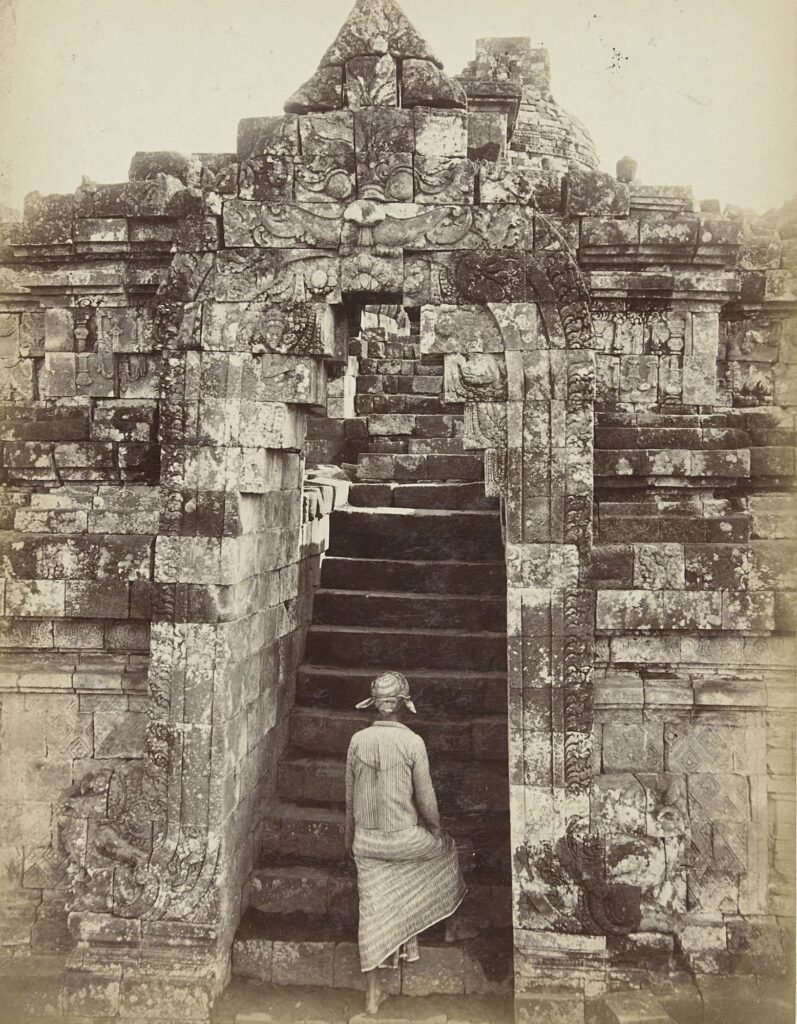
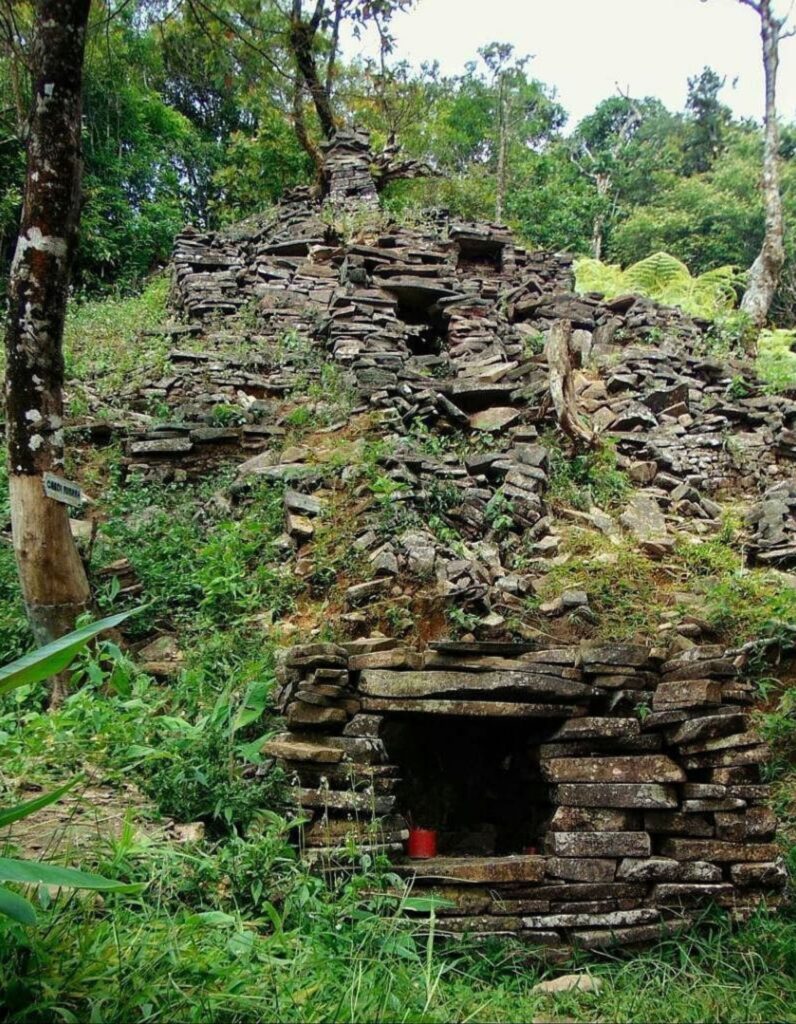
The location of the Kalingga Kingdom remains debatable due to a lack of evidence. The most popular opinion of its location is in the north of Mount Muria, near Jepara. Kalingga had 28 small vassal states and was centered in Chopo. The archaeological evidence to support the existence of Kalingga is Tuk Mas Inscription found in Magelang which describes water springs flowing from the Ganges River. This inscription proves that Kalingga had fertile soil and the people made a living from farming. Temples from the Kalingga era are also found in Jepara, such as the Angin Temple, Bubrah Temple and Aso Temple.
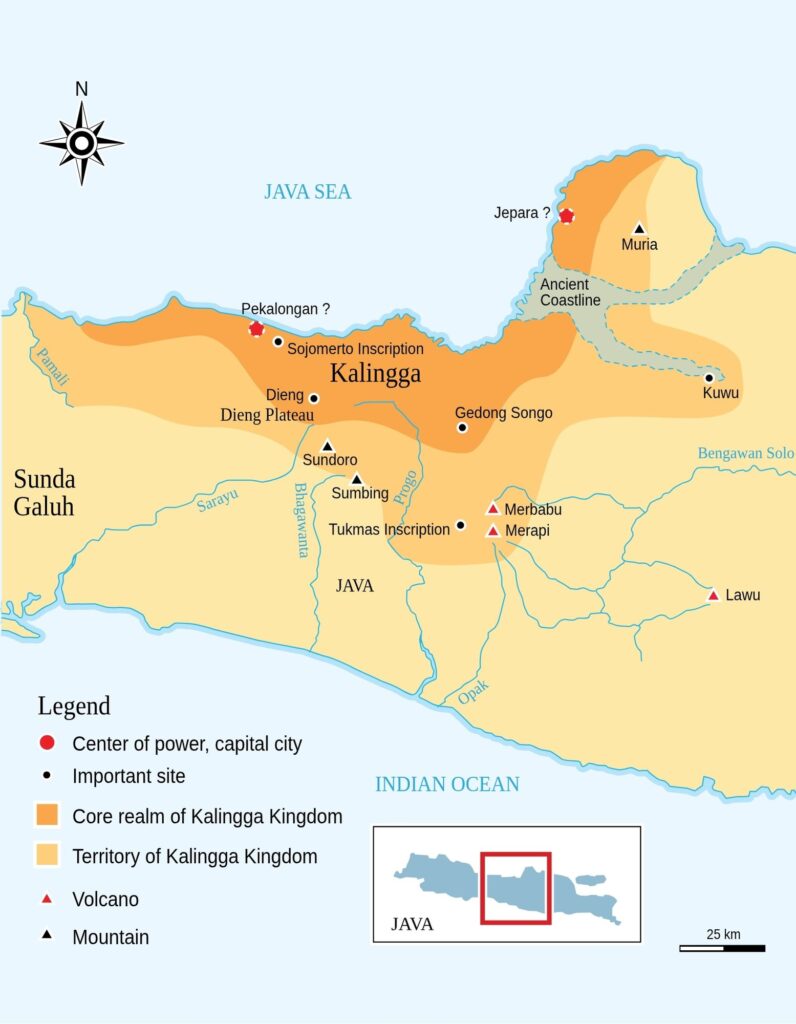
The Kalingga Kingdom was involved in international trade. Its location was ideal to control the spice trade from the Maluku Islands. Kalingga also produced tortoiseshell, gold, silver, rhinoceros horn, and elephant ivory for trade. Kalingga’s fertile hinterland was used for agriculture and produced rice for export.. Kalingga was also known for its alcoholic drinks made from coconut and sugar palm flowers, it had a sweet, intoxicating taste.
The first king of Kalingga was Prabu Wasumurti, who was later succeeded by Prabu Wasugeni, the father of Ratu Shima or Dewi Wasuwari. Ratu Shima was the sixth queen of Kalingga who successfully brought Kalingga to glory. However, before Ratu Shima reign, several kings ruled Kalingga, these included Prabu Wasudewa, Prabu Wasukawi and Prabu Kirathasingha. Ratu Shima was crowned as a queen in 674 AD to replace her husband, Prabu Kirathasingha, who passed away. Ratu Shima became the first female Javanese monarchy leader and is revered to this day as a symbol of female leadership and gender equality.
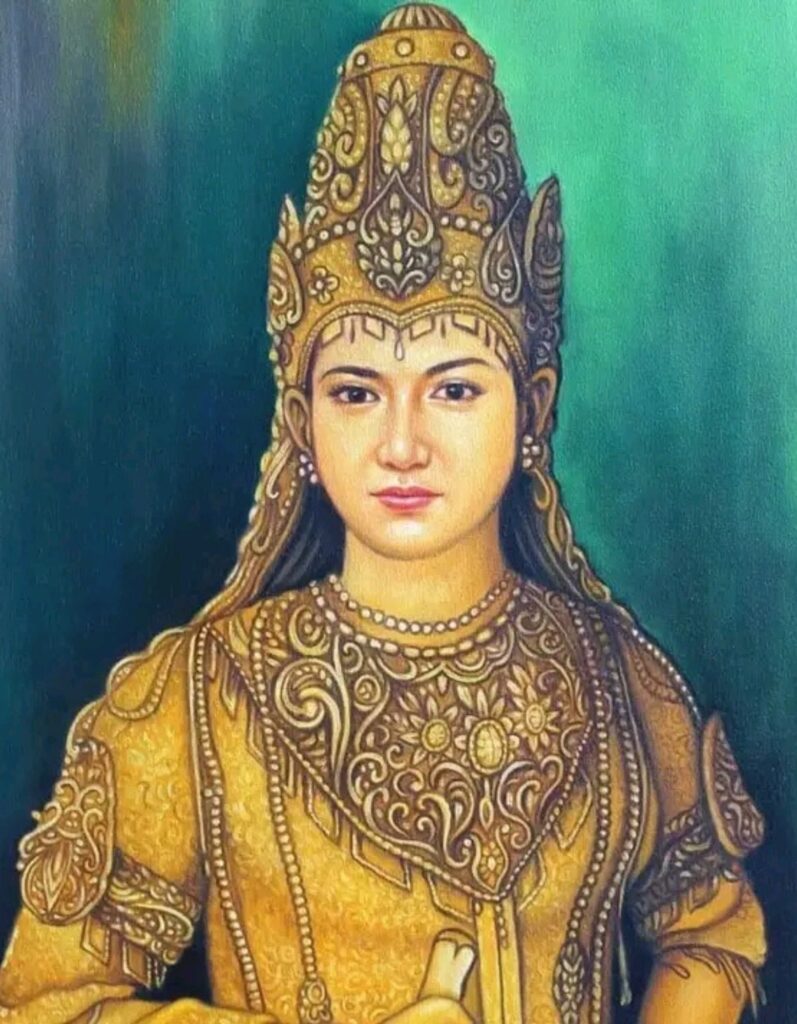
Ratu Shima’s name appears repeatedly in Chinese records and Carita Parahyangan. Ratu Shima ruled her kingdom with firmness, toughness, justice, and wisdom. Her firmness discouraged pirates from even approaching her territory. She was also known for her strict rule that anyone caught stealing would have their hand amputated. The people of Kalingga were forbidden from touching or taking anything that didn’t belong to them, including items scattered on the streets. These rules were obeyed by the people of Kalingga, ensuring order and peace in Kalingga. These rules have been passed down to Javanese society to this day, embodying the values of justice and the supremacy of social ethics.
Since the 7th century, women in Kalingga have received education and roles equal to men. From childhood, Ratu Shima received archery lessons from her foster mother. She also received religious and martial arts teachings from the monk Janabadra at Sutha Monastery. Janabadra was a prominent Buddhist monk and his name is commemorated in Chinese records. He was assisting Chinese monks who were sent to Kalingga to translate Hinayana texts into Mandarin.
When it was established, Kalinga was a Buddhist kingdom. In Kao Seng Shuan (biography of monks) written in 519 AD, it mentions the life of monk Gunavarman, heir to the king of Kashmir. He arrived in Kalinga around 424 AD thus implying that Kalinga was a Buddhist center from the start. Later in the 7th-8th centuries, Buddhism lost popularity in Kalinga and more temples were starting to be dedicated to Hindu Gods.
The Kalingga Kingdom began to decline after the death of Ratu Shima, as her successors lacked the skills to lead their country. The primary factor contributing to the Kalingga’s downfall was trade competition with the Sriwijaya Empire. Sriwijaya’s attacks ultimately forced Kalingga rulers to relocate their kingdom to eastern Java. After this relocation, the kingdom’s power began to disappear.
The Kalinga Kingdom is often associated with the Sanjaya Dynasty which ruled during the Mataram era in Central Java and Yogyakarta. According to the Carita Parahyangan manuscript, Ratu Sima had a granddaughter named Sahana who married King Brantasenawa from the Galuh Kingdom. Sahana had a child named Sanjaya who would later become the Sanjaya Dynasty.
Kalingga is considered a significant milestone in the development of ancient Javanese culture, religious and social systems. Two major religions, Mahayana Buddhism and Hinduism, coexisted in harmony, reflecting the high level of tolerance within Kalingga society. Jepara’s distinctive woodcarving is often associated with the legacy of the Kalingga Kingdom, which is still preserved to this day. Jepara woodcarving is thought to have existed since the Kalingga era. However, this claim remains limited due to the limited archaeological evidence found.
Bibliography
Munoz, P. M. (2006). Early kingdoms of the Indonesian archipelago and the Malay Peninsula. Singapore: Mainland Press.
Abbad, M., et al. (2025). Investigasi kualitatif tentang keberadaan Kerajaan Kalingga pada masa kini. Jurnal Kultur, 4(2), 342-352.
