
Uncategorized
Papua, Asmat Tribe and the Art of Carving
Feb
Papua Island, formerly known as Irian, is the second largest island in the world after Greenland. Papua New Guinea and the Republic of Indonesia each control a portion of the island that is now split into two nations. The Asmat tribe is one of numerous tribes that inhabit the island of Papua. The coastal region of the Arafura Sea and the mountainous interior of Jayawijaya make up its two resident populations.
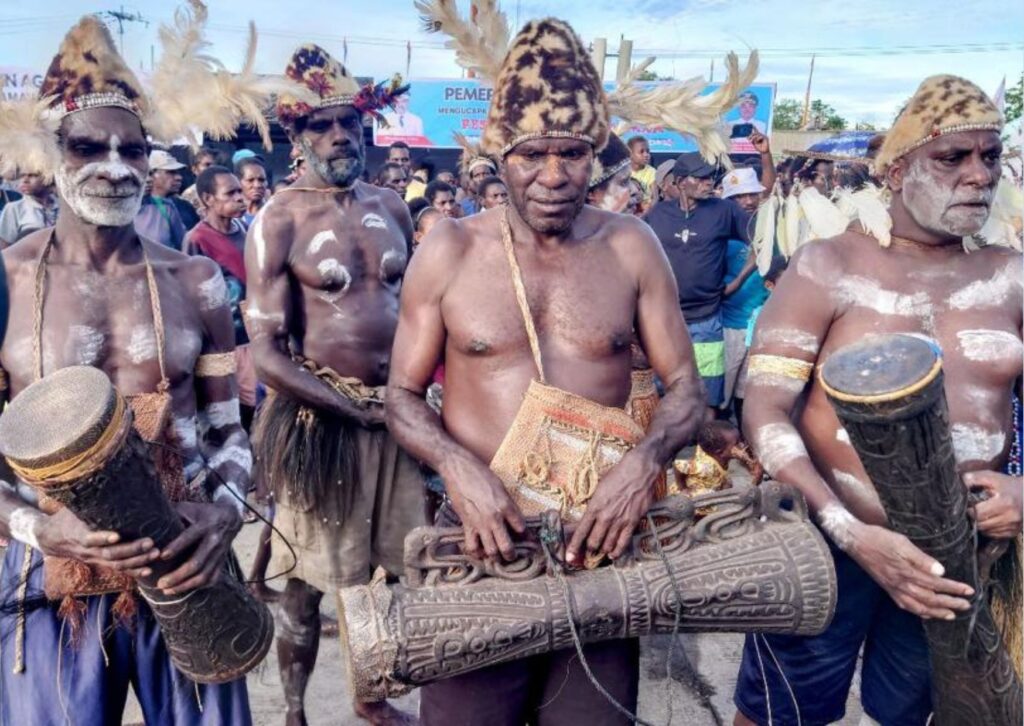
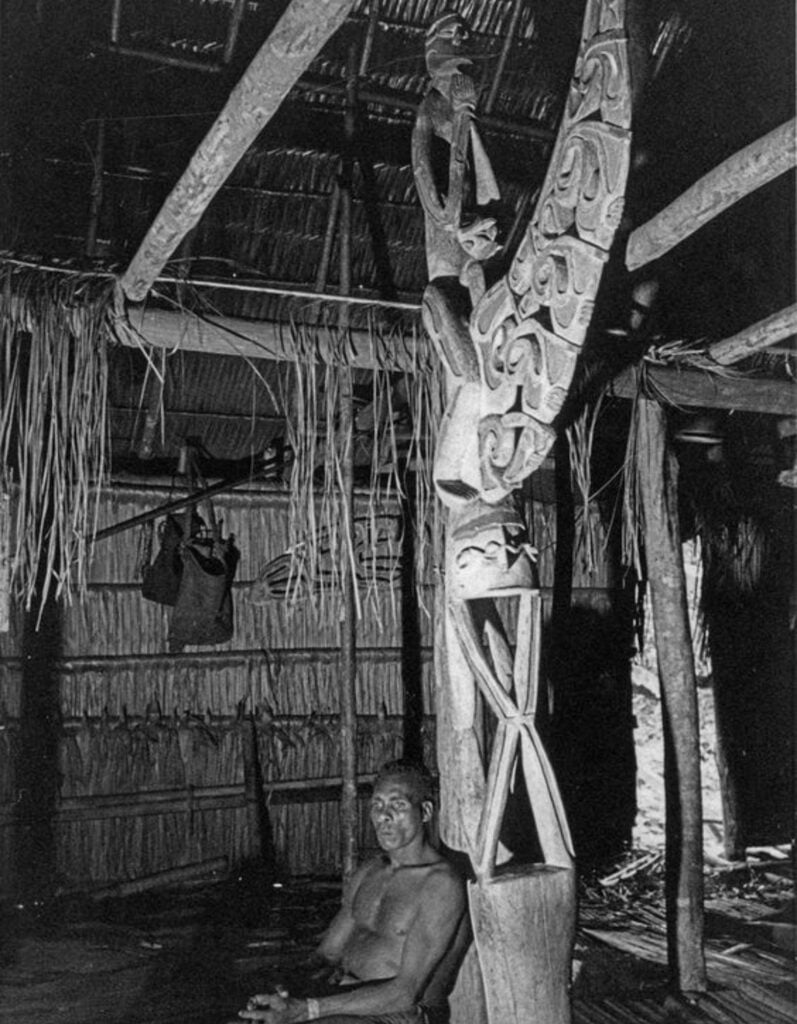
The Asmat people, according to Father Zegwaard, a Dutch Catholic missionary, believe they are descended from the Deity Fumeripits (God the Creator). That said, the god Fumeripits was stranded on the beach dying and unconscious due to fighting a giant crocodile in the land of Papua. Nevertheless, a flock of flamingos intervened to save his life, allowing him to survive and recover. Then, he lived by himself near a river. Fumeripits, the creator deity, erected the “Yew” house, a lengthy structure filled with wooden figurines he had personally crafted into human shapes, as a way to alleviate his loneliness. Nonetheless, he continued to feel lonely. Feeling driven to create sounds, he built a tifa, a wooden drum, which he pounded daily. One day the wooden statues he had made moved and danced to the rhythm of the tifa being played. Miraculously, the statues then turned into a living human form. They danced to the rhythm of the tifa beat with their legs slightly apart and their knees moving left and right, which is now the traditional dance of the Asmat tribe that is performed whenever there is a traditional event.
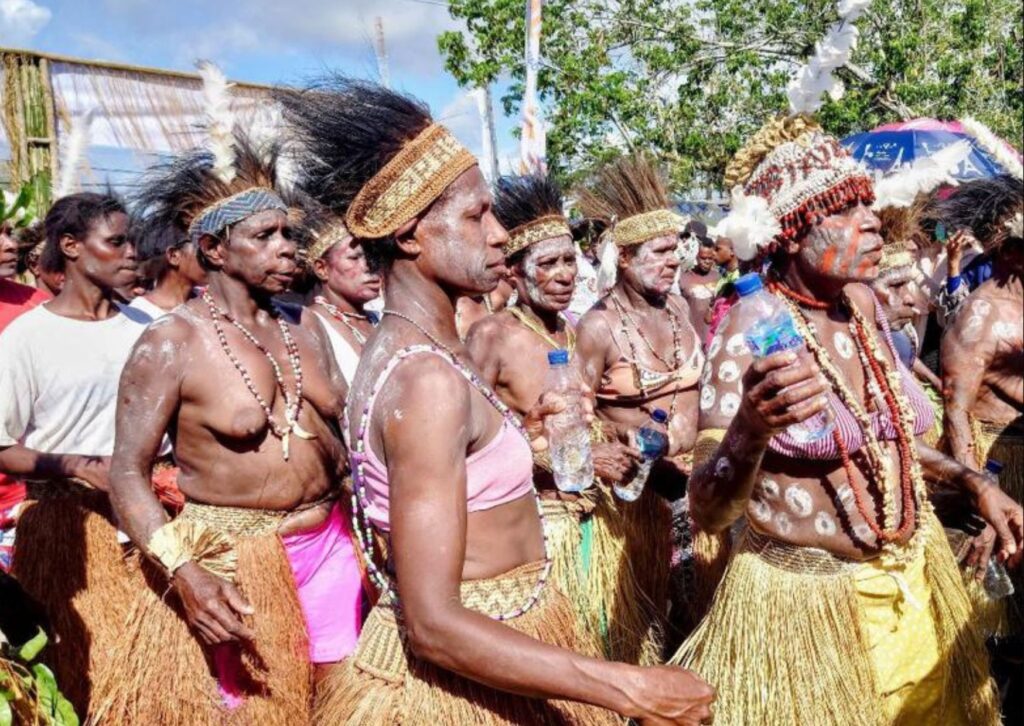
Since then, Deity Fumeripits has continued to wander the land of Papua from the shores of Arafura to the mountains of Jayawijaya. In each area he visited, Deity Fumeripits built longhouses “Yew” and created carved human-shaped statues. The statues come to life and dance when the tifa drum is played, and these new humans later became the ancestors of the present-day Asmat tribe. Traditional ceremonial facilities in the Asmat tribe still mostly consist of dances accompanied by tifa drums and wooden carvings of statues. In contrast to other local wood carving traditions, the Asmat carving art has persisted to the present day and has many distinctive qualities. Since there is no set design used when creating an Asmat carving, no two pieces are exactly alike. The most common themes used by Asmat tribe sculptors include the ancestors, the original ancient boat of the tribe (the wuramon), which serves as a symbol of the spirit boat that transports the ancestral spirits to the afterlife, as well as carvings of flora and fauna like cassowaries, bird of paradises, and various plant species.
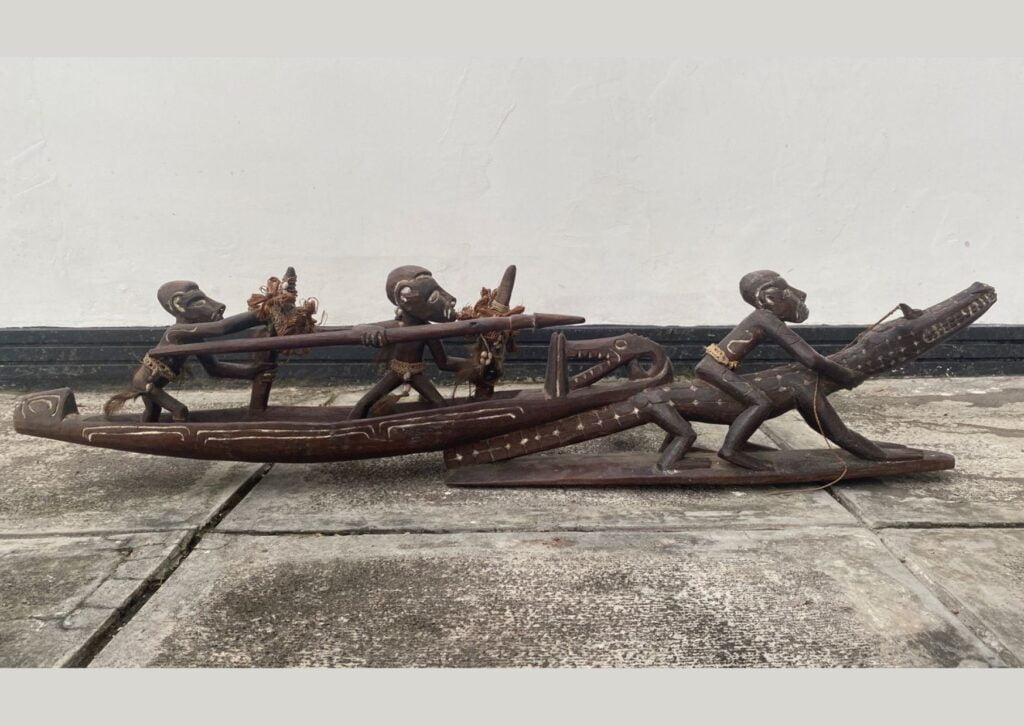
The Asmat sculptors in the past solely employed sharp stones as tools while creating carvings. Black, white, and red used to color Asmat statues are made from plant materials. White stands for bones, black for skin, and red for flesh. In terms of wood, they used iron wood from customary forests for older carvings; however, because iron wood was no longer readily available at this period due to excessive logging, the recent carvings typically used teak and sago wood, which grew abundantly in Papua.
The Asmat carvings are among the best wood carvings in the world because collectors from all over the world, including Europe and the Americas, appreciate this distinction.
