
Uncategorized
Sade Village: Preserving the Living Heritage of the Sasak People
Dec
Lombok is one of the two major islands which is part of West Nusa Tenggara province. Lombok is located between Bali and Sumbawa which results in a cultural blend influenced by Balinese, Javanese, and Sumbawa culture. The indigenous people of Lombok are called Sasak and characterized by Malay-Polynesian culture. The majority of the people in Lombok adhere to Islam that is divided into two types: Islam Wetu Telu and Islam Wetu Lima. The Sasak who adhere to Islam Wetu Telu still believes in the animism concept. Meanwhile Islam Wetu Lima follows the Shari’a teachings deeply.
Lombok becomes a popular destination for both local and international tourists because it’s located next to Bali thus it’s accessible by boat or plane. Lombok offers natural beauty in the form of white-sand beaches and waterfalls. There is also Mount Rinjani, the third highest mountain in Indonesia and becomes a favourite hiking destination. Aside from its natural beauty, tourists can also see and experience the traditional life of Sasak people by visiting traditional villages. The most renowned traditional village in Lombok is the Sade Village.
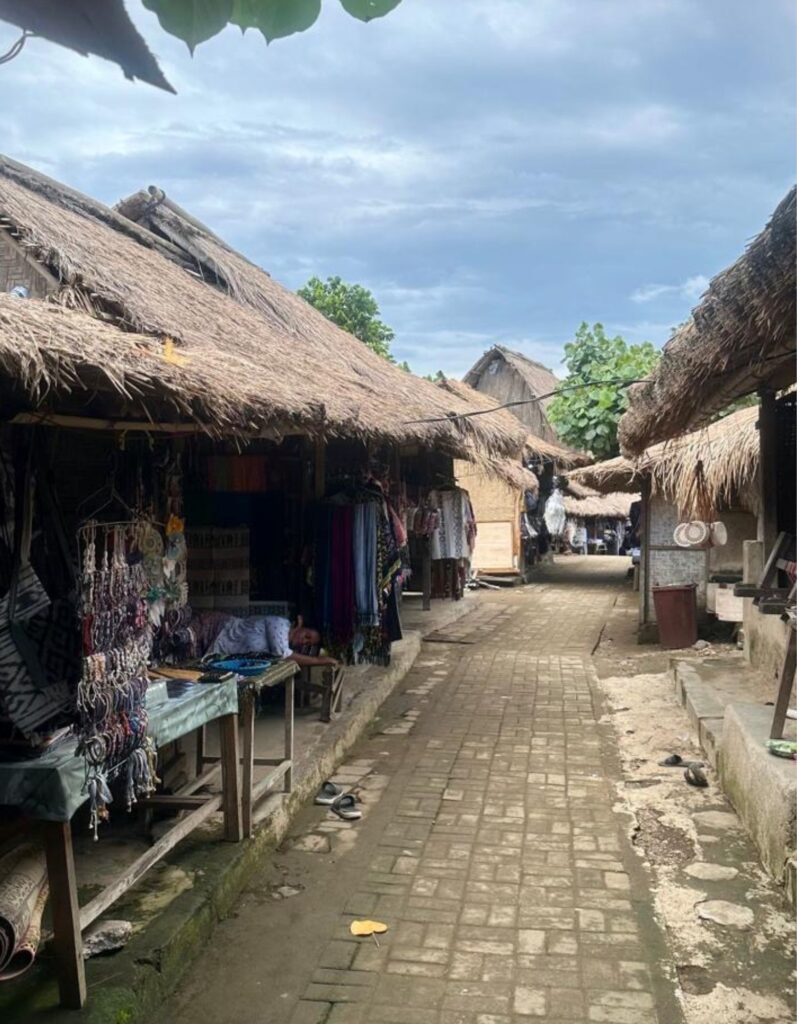
The Sade Village is located in the Central Lombok, close to the Mataram city thus it’s easily accessible. The Sade Village has been around for 600 years and has become a tourist destination since the colonial era. The word “Sade” comes from the old Javanese language “Husade” which means remedy. In the past, people visited Husade Hill to cure their diseases. At present time, the people of Sade are the fifteenth generation. The people of Sade are part communities which come from several areas in Rembitan Village, namely Telok Bulan, Rembitan, Lentak, Pengalu, Selak, Pelukan, Rumbi, and Rebuk. The Sade Village was officially opened as a tourist attraction by Indonesia’s third president B.J. Habibie in 1990. Until today, it remains a favourite destination for tourists who want to see the pristine life of the Sasak people.
The Sade people still married to their relatives from the same village. Marriage between relatives is considered easier and cheaper than marrying someone from another village which can cost several buffalos as customary fee. As a result, the people of Sade Village are from one lineage. The Sasak people in this village also still practice merariq or kawin culik (bride kidnapping). In kawin culik, the future husband would abduct the future wife before proceeding to the wedding ceremony. However, kawin culik can’t be done carelessly. There are several rules that must be followed.
In kawin culik tradition, the girl will first choose her potential partner. Then she and her partner will make a deal about when and where the abduction will be done. This agreement must be kept secret to prevent the failure if it becomes known to another man who also wants to marry the girl. The girl’s parents must not know about this agreement either because if the parents know and are not accepting the marriage, they can choose a man to match with their daughter. This situation is known as pedait. In addition, the abduction can’t be carried out during the daytime because it’s easily noticed by many people, including other men who compete to marry the girl.
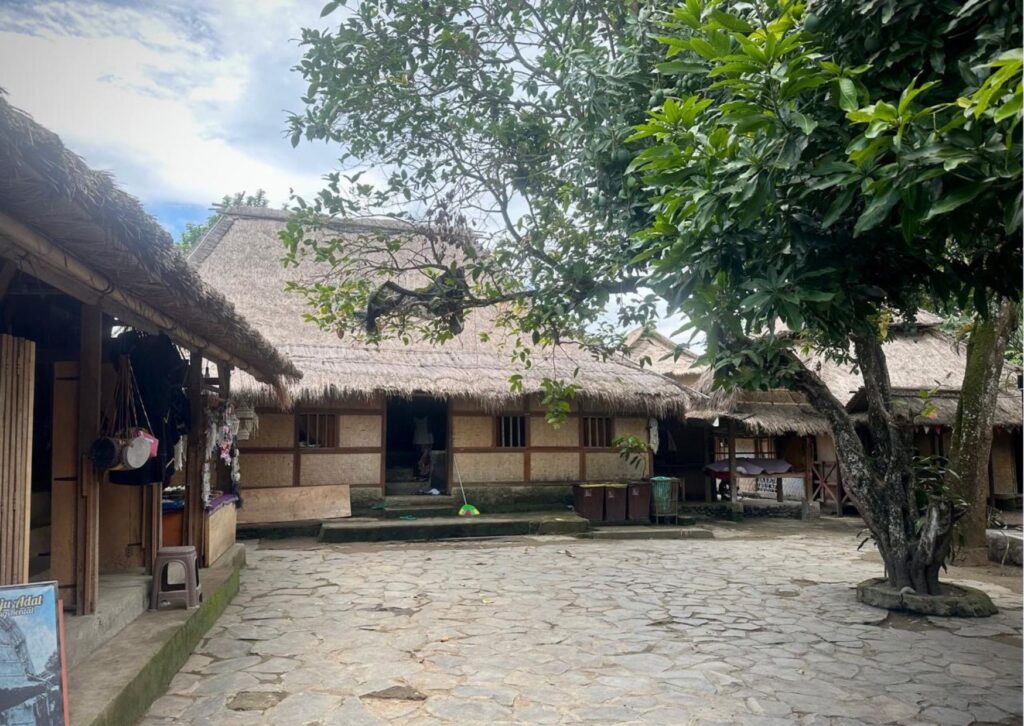
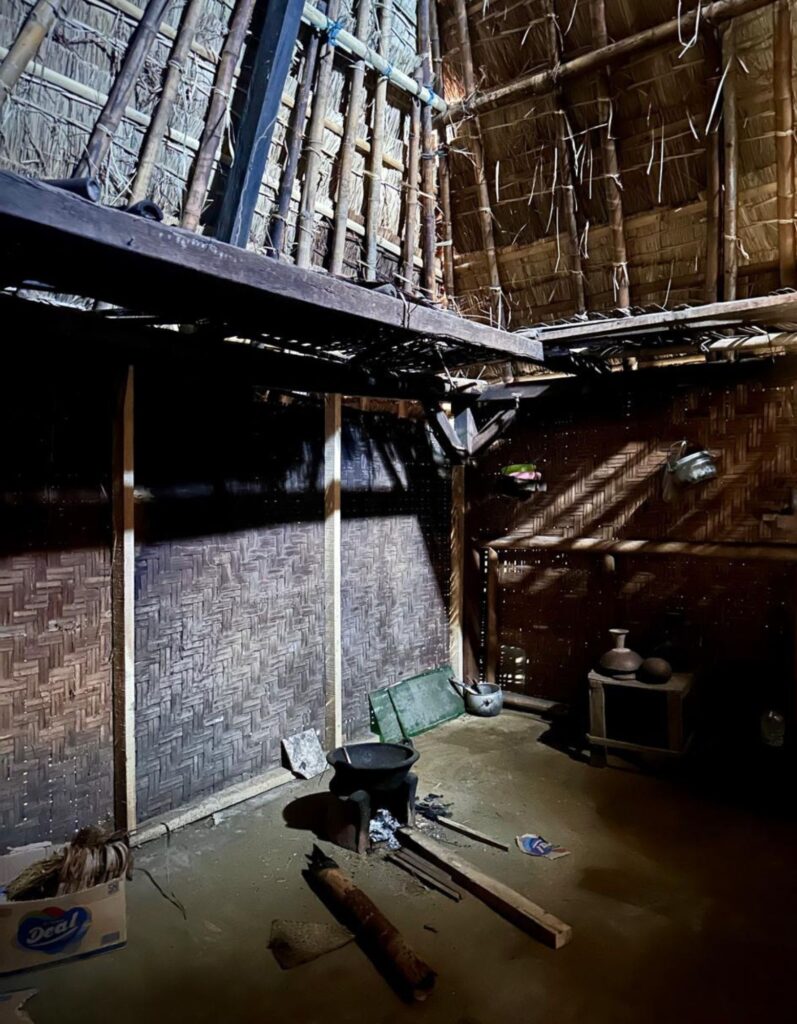
The Sade Village has hundreds of traditional houses. However, each house may only be inhabited by one household. When the children are married, they aren’t allowed to live in the same house with their parents. Each house maintains traditional architecture and is built using materials from the surrounding environment. The walls of a Sasak house are made of woven bamboo (bedek), its pillars are made of wood, and its roof is made of dried reeds. Interestingly, the floor of the Sasak house is made from a mixture of soil, rice-husk ash, and tree sap that is coated with buffalo dung. The people of Sade believe that buffalo dung helps ward off magical influences. Buffalo dung can also reduce humidity, repel insects or mosquitoes, and make the floor smoother. Buffalo dung is also believed to clean the floor from dust.
When building the house, the Sade people follow the papan warige guidelines from the rimbon tapel adem and tajul muluk. However, only the traditional leader can determine the time to begin construction. The Sasak people believe that the best months to start building a house are the third and twelfth months of the Sasak calendar. They also avoid building houses during the months of Muharram and Ramadan because it’s believed to bring bad luck to the house owner, such as illness or fire.
The Sasak people are also selective in choosing the location to build a house. They believe an improper location can bring misfortune. The Sasak people avoid certain places such as former fireplaces, dumping sites, and wells. They don’t build the house facing the opposite direction or having a different size from the previous house. The size of the house must remain consistent with the previous house. Breaking these rules is considered as an act of breaking taboo (maliq lenget). The Sade people build houses through mutual cooperation (gotong royong). This tradition is also seen when someone’s house is damaged. The neighbors will voluntarily help to repair the house.
The Sasak has several types of houses, each suited to its specific function. There are around 11 types of houses, including Bale Lumbung, Bale Tani, Bale Jajar, Berugag or Sekepat, Sekenam, Bale Bonter, Bale Beleq Bencingah, Bale Tajuk, Bale Gunung Rate, Bale Balaq, and Bale Kodong. The doors of these houses are built low so that anyone entering the house must bow their head as a sign of respect to the homeowner. Of these 11 types, the structure used for daily life is the Bale Tani, which houses villagers who work as farmers. There is also the Bale Bonter, which serves as the residence for village officials.
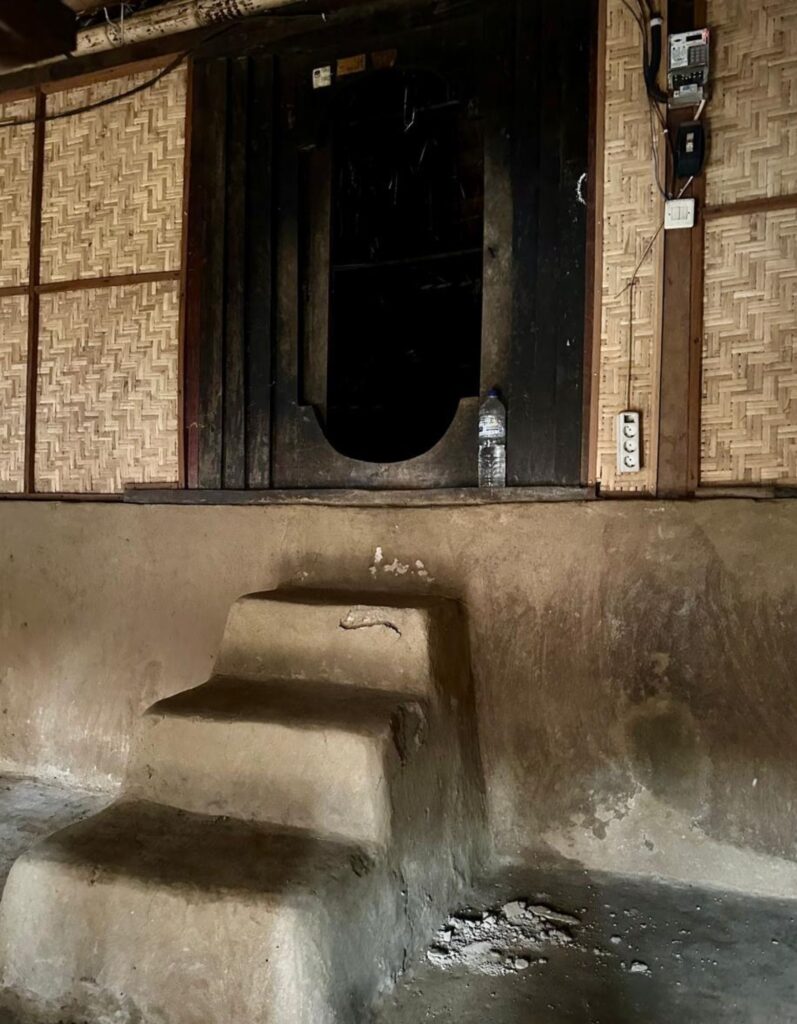
Bale Tani has two sections. The first section is Bale Luar (Sesangkok), which functions as a guest room, childbirth, bedroom, and place to lay the body of the deceased before burial. The second room is Bale Dalam. The Bale Dalam serves as the kitchen and the bedroom for daughters, equipped with a sempare which is used to store food and household tools. The sempare hangs on the ceiling. The Bale Luar and Bale Dalam are connected by three steps, symbolizing the three stages of human life: birth, growth, and death.
Lombok has a historical background of drought and famine during Dutch occupation (1897–1945). Poverty in Lombok at that time was caused by rapid population growth, high taxes, and extensive rice exports from Lombok to Europe. This situation made the Sasak people very cautious in managing crops, especially in storing rice. The Sasak have rice barns known as alang, sambi, geleng, and lumbung, classified according to their shape and size. Rice barns may be private or communal. The area beneath the barn can function as a place for gathering or socializing. The size of the barn also reflects the owner’s socioeconomic status, as it indicates the extent of the rice fields they own. In Sade Village, only married women are allowed to enter the barn to collect the rice. The Sasak assumes that only married women know the amount of rice needed for their families.
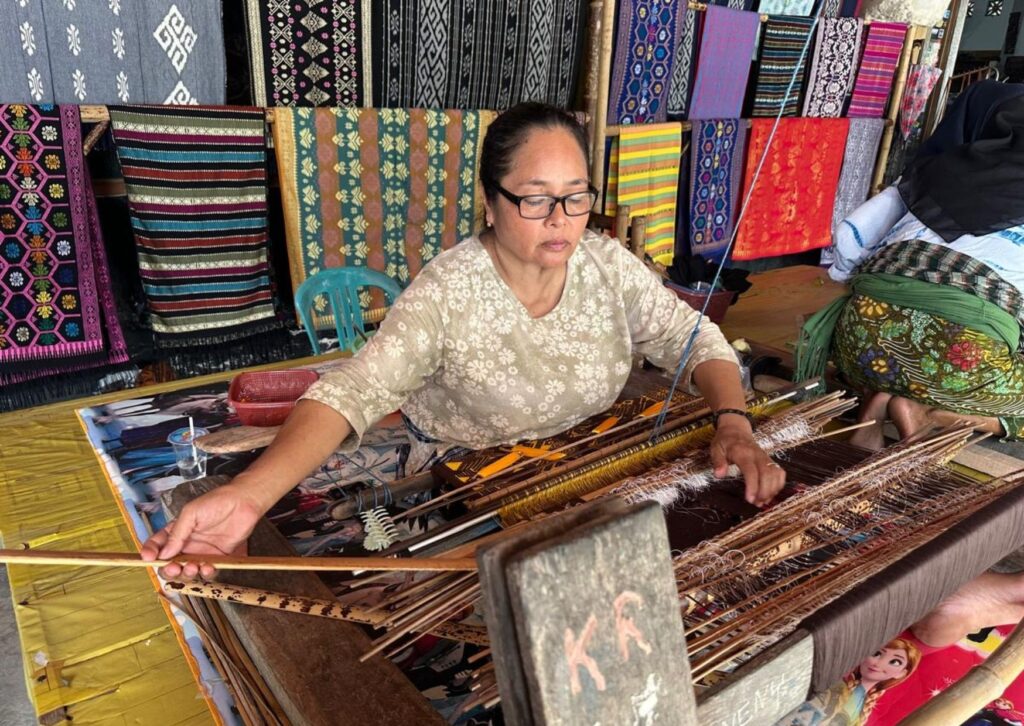
As a tourist attraction, Sade Village offers various local handicrafts sold in nearly every household, one of which is the Sasak woven textile. The materials used for weaving come from the surrounding environment and are processed entirely by hand. Sasak women are skilled weavers and are taught the craft from a young age. In fact, some Sasak communities still uphold the tradition that a woman who has not yet mastered traditional weaving cannot marry because she is not considered mature.
The beauty of Lombok goes beyond its natural landscapes. Its cultural richness is equally captivating. When visiting Lombok, be sure to explore Sade Village to experience the traditional life of the Sasak people and to support the local economy.
Bibliography
Firdaus, D. & Purnamasari, O. (2023). When storytelling complements promotion: A study at Sade Village towards sustainable tourism. Advance in Social Science, Education and Humanities Research, 272-279. 10.2991/978-2-38476-016-9_27
Mahardika, A. & Satria, V. (2021). The traditions of Sasak tribe in Sade Village, Central Lombok, Indonesia. International Journal of Social Science and Religion, 2(3), 285-295. http://ijssr.net/index.php/ijssr
Sukenti, K., Hakim, L., Indiryani, S., Purwanto, Y., & Matthews. P. (2016). Ethnobotanical study on local cuisine of the Sasak tribe in Lombok Island, Indonesia. Journal of Ethnic Foods, 3, 189-200. http://dx.doi.org/10.1016/j.jef.2016.08.002
