
Uncategorized
The Weapon of Nusantara and Its Story
Jan
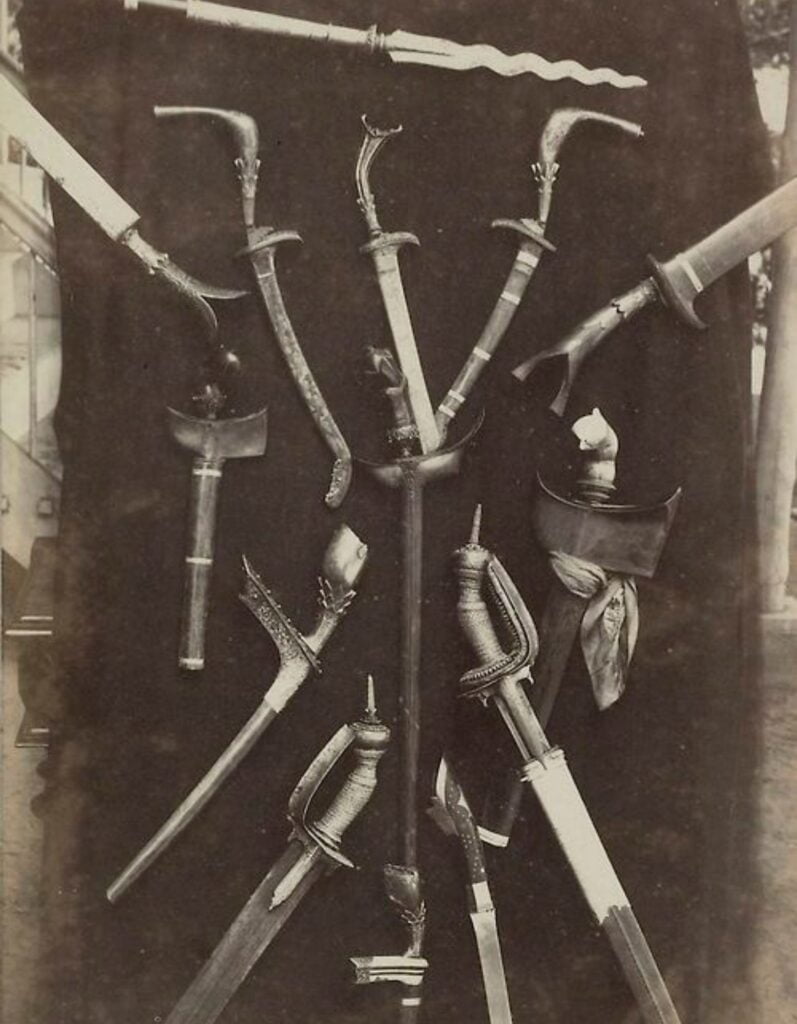
Indonesia or formerly known as Nusantara, has abundant natural resources and produces a wide variety of crops and spices. As a result, Nusantara has always been a spotlight for explorers who have visited since centuries ago. In fact, Indonesia has been at war with other countries since 350 years ago to defend the spice and crops from the colonists who wanted to monopolize the archipelago.
Since the colonial era, Indonesian have fought against the invaders using their native weapons. For instance, the Acehnese tribes in Sumatra island use Rencong, the Dayak tribes of Kalimantan island employ Mandau, the Bugis of Sulawesi use Badik, Papuans use Pisau Belati Kasuari (The Cassowary Daggers) and the Javanese uses Keris.
1. Rencong
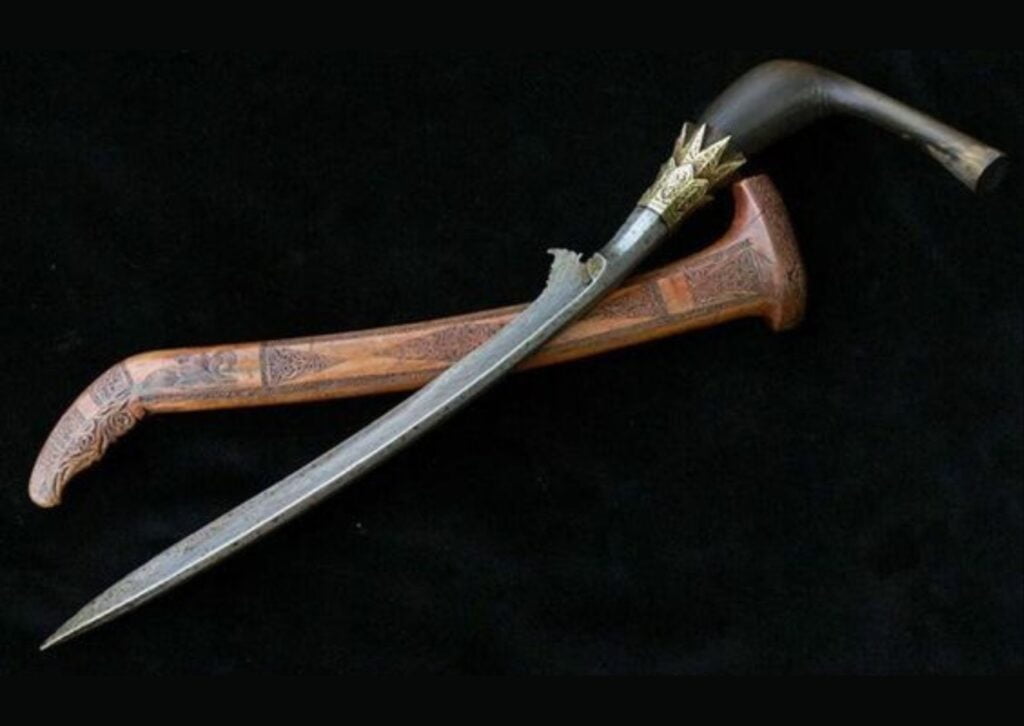
In Aceh, Sumatra, Rencong is not only used as a self-defense tool, it has a unique feature and unexpected charm, which symbolizes gallantry, honor, and an aristocracy. It is believed to have mystical powers. According to the head of the Teaching and Education Faculty of Syiah Kuala University, Husaini Ibrahim, the type of Rencong is distinguished by the material it is made of. Materials such as copper, silver, gold, and ivory belong to aristocrats. While those for ordinary people usually only use iron as the raw material. As time goes on, Rencong is also used as wedding jewelry and other important traditional events. Aceh’s ancestors, who are inhabitants of Sumatra island, believe that Rencong can protect the owner and his family from bad spirits and treat possessed people.
2. Mandau
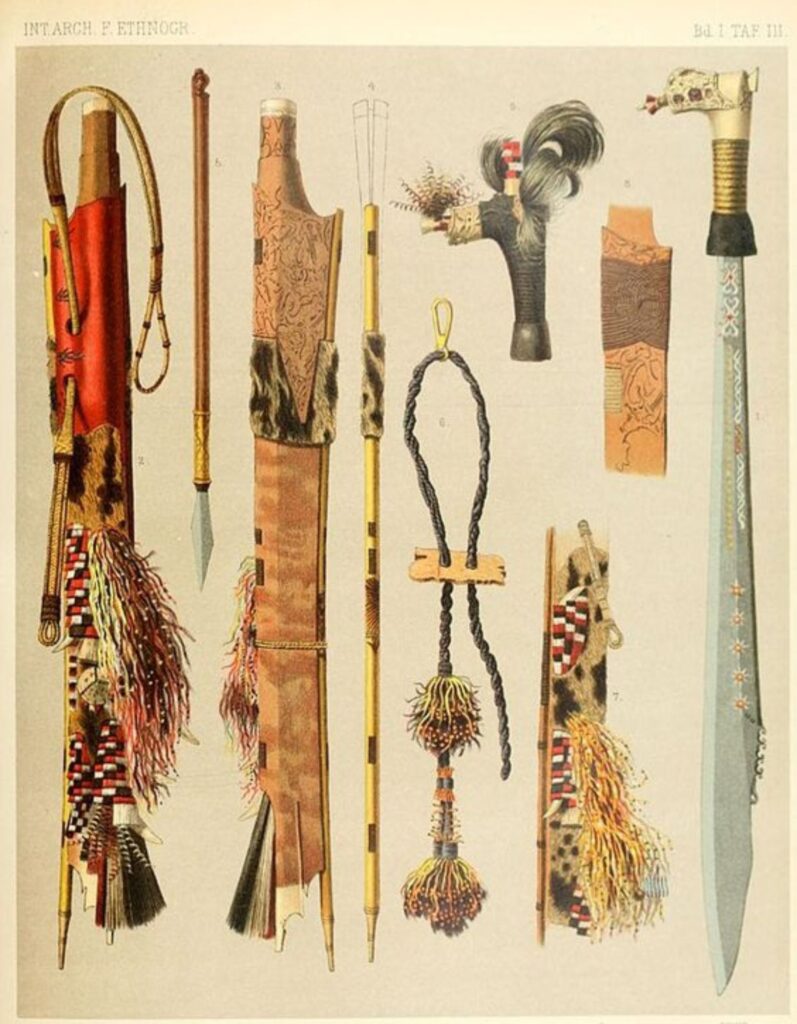
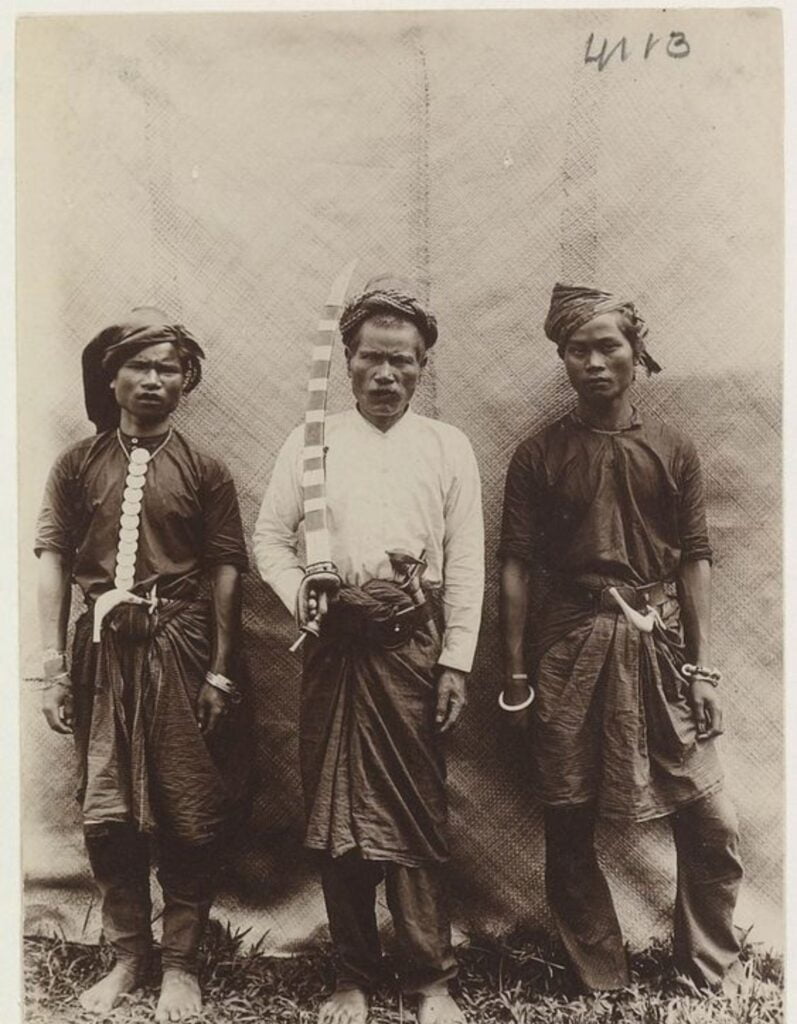
On the island of Kalimantan or also known as Borneo, has a weapon called Mandau. It originates from the Dayak tribe and has long been a weapon that every male in the group has. Mandau is a weapon resembling a sword. The engravings on the blade of this sharp object give it its own distinctive features. On the blade of this weapon are also often found copper or brass-covered holes. In addition to being a decorative element, it serves as a count of the number of people killed by the Mandau. The term mando or mandau comes from the Dayak language, Central Kalimantan. “Man” is an abbreviation of the word “kuman” which means to eat, while “dau” or “do” comes from the word “dohong” which means a dagger; which is another way of saying “a dagger that takes human life.” The Dayak tribe is known for being violent. They also had skilled fighters who were fight against other nations such as the Malays, Austronesians, and the Dutch and Portuguese at that time. Because of this war, the Mandau Dayak was known as a sharp weapon capable of decapitating enemies so that no one dared to approach their territory. In the past, Mandau was made of mountain stone which contained iron and had to be made by a blacksmith who was able to fill it with the spirits of the ancestors. Thus, it is the reason why Mandau Dayak is more powerful and sacred than other weapons such as spears and sumpit (blowgun).
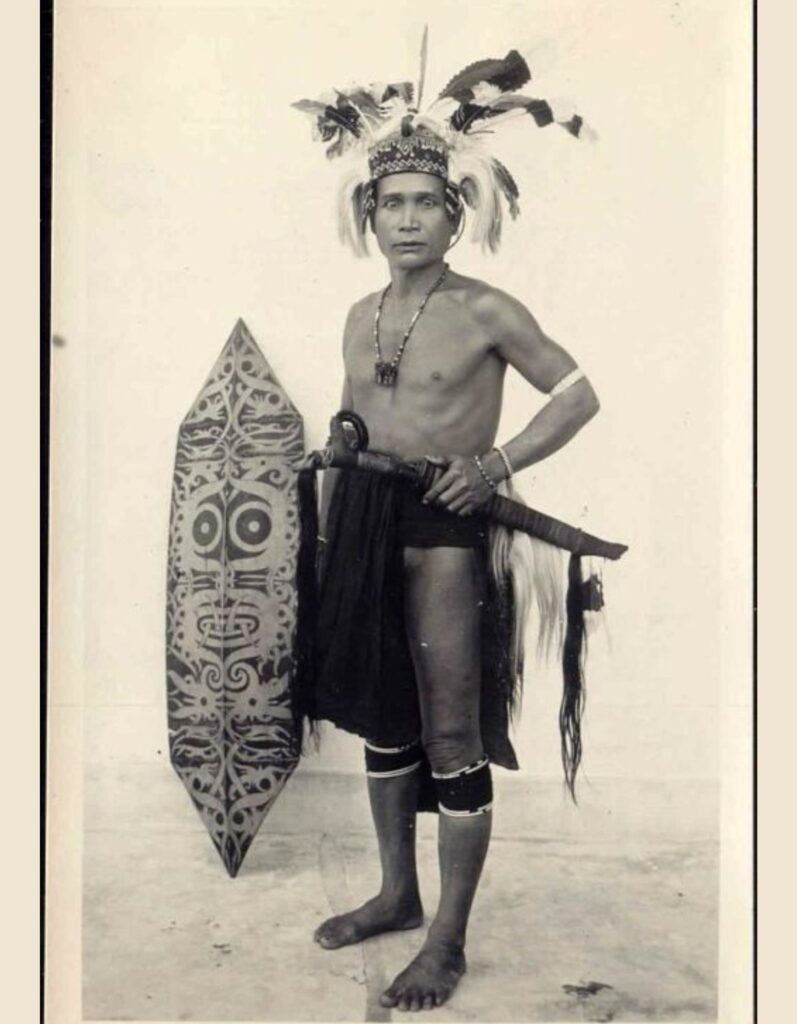
Mandau consists of two parts which are bilah (the blade) and kumpang (sarung). The blade has a shape that is similar to the head of the Tingang, where the Dayak people consider the Tingang as a sacred bird. Although each blade has the same shape, the engravings are different. Kumpang is usually decorated with various carvings that are meant to scare off wild animals. Furthermore, Kumpang is made of wood covered with deer antlers. At the base, there is a rattan crochet that is used as a hook rope. On the opposite side, there is a little pocket that may be used to hold amulets and heirlooms as well as smaller weapons like carving knives. Nowadays Mandau is kept as an heirloom and only displayed at weddings or other major events.
3. Pisau Belati Kasuari
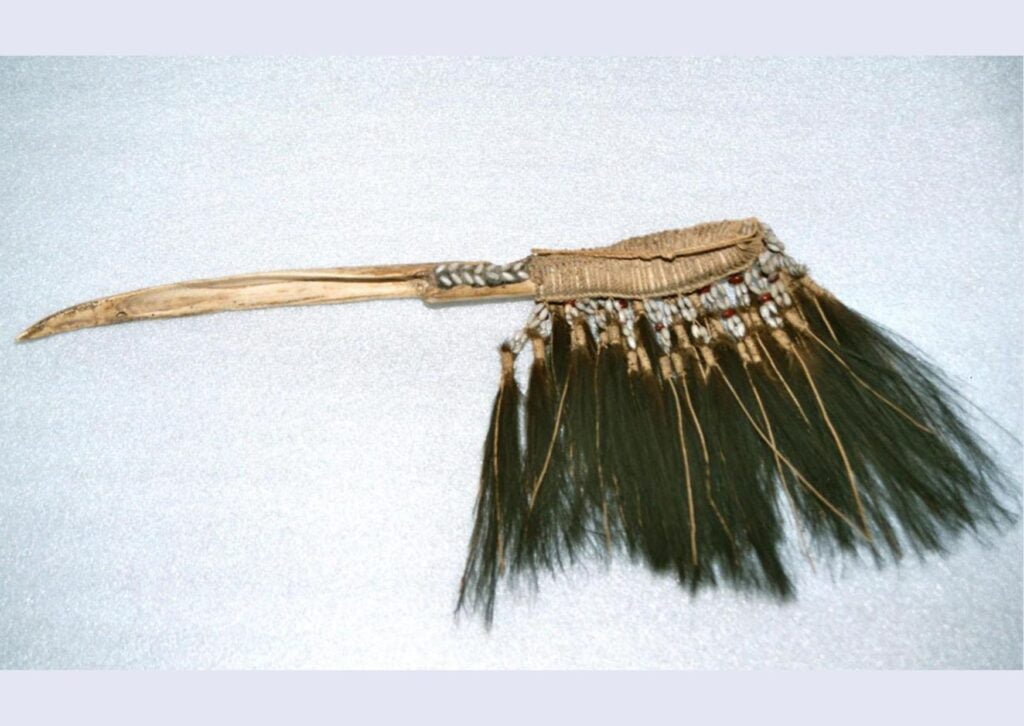
The island of Irian which is located in the east of Indonesia or better known as Papua has a traditional weapon called Pisau Belati Kasuari (The Cassowary Dagger). Pisau Belati Kasuari, which belongs to the people of Papua, is very different from knives in general because the basic material for the knife comes from Cassowary’s bone. The shape of Pisau Belati Kasuari is not too long and is made by sharpening the tip. Thus, it is decorated with feathers at the grip. The weapon is also decorated with plaited leather which has previously been painted white. Another decoration is in the form of shells attached to the Kasuari’s feathers. This dagger was first introduced by the Asmat tribe. Before hunting or fighting, this knife is smeared with poison to make it easier to hunt or kill opponents. In the past, this weapon was used only for ritual sacrifices or battles. However, in the present time, these weapons are used as a complement to traditional Papuan men’s clothing and for hunting. Pisau Belati Kasuari is used by wrapping it around the side of the man’s waist and is used during weddings and other big traditional events of the Asmat tribe.
4. Badik
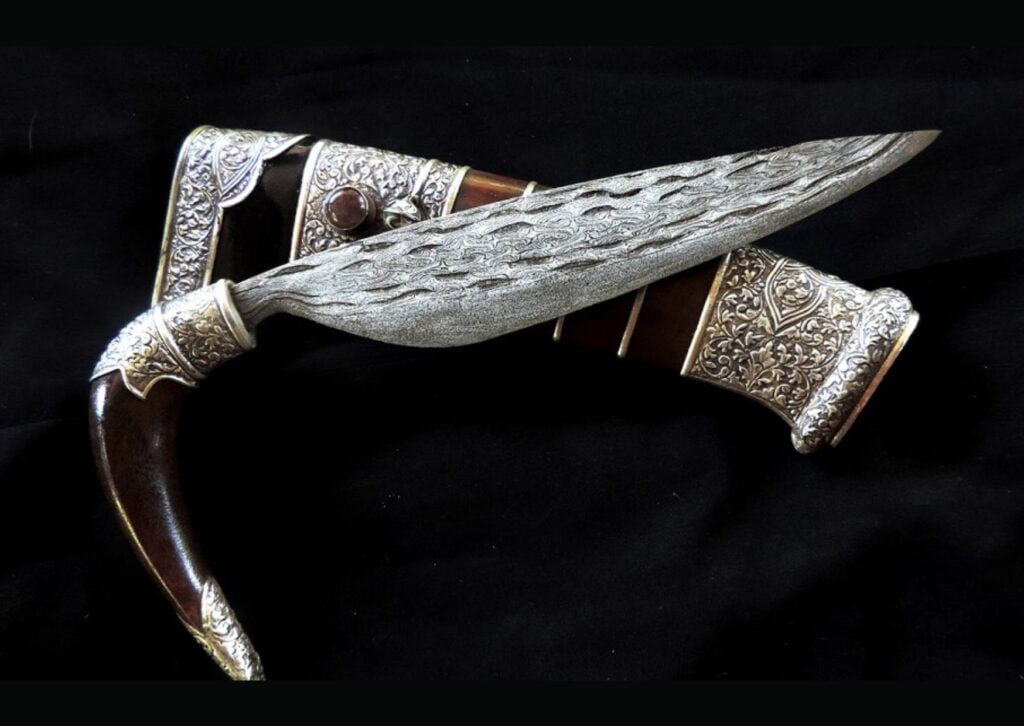
Sultan Hasanuddin is an Indonesian National Hero from the island of Sulawesi. The Dutch called him “the Rooster of the East” as he was described as aggressive in battle. During the battle, he always uses Badik against the invaders. Badik is a sharp weapon similar to a dagger. Initially, this weapon was known as Kalio. It is suspected that Badik was first made in the Luwu area which in the Lagaligo ancient manuscripts is known as the beginning of the iron civilization in Sulawesi. In the past, Kalio was only used as agricultural equipment and self-protection. Each Badik consists of three parts: a blade of selected iron that has prestige, a hilt and a scabbard. The specialty of Badik can be seen from its prestige on the blade, character (sisik) and the right size for the owner. Badik can be distinguished by the blade and handle. The handle is usually made of Kemuning wood or horn and ivory. Meanwhile, the scabbard is made of sandalwood. Currently, Badik is still the identity and pride of the people of South Sulawesi. However, its use is more for heirlooms or private collections. Badik is also still used for weddings and other traditional events.
5. Keris
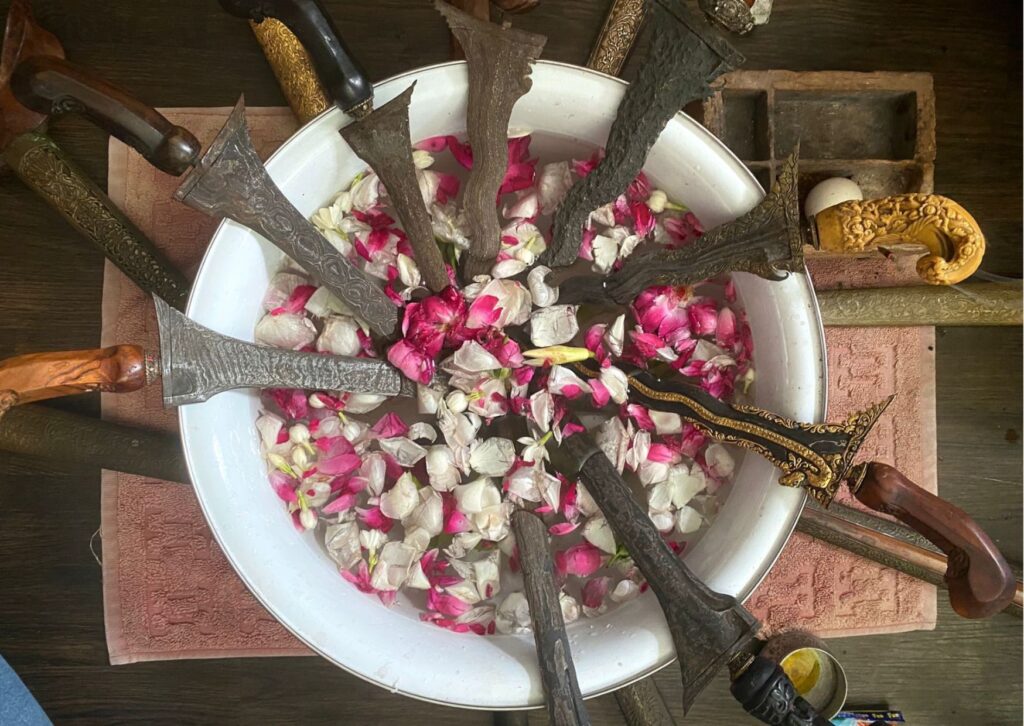
On the island of Java, particularly in Central Java and Yogyakarta, Keris is one of the traditional weapons that was also used by ancestors and heroes against the colonialists. The sinuous shape of the Keris blade that look like a snake makes it easy to recognize. Generally, Keris has a broader and asymmetric shape near the hilt and is made of a combination of several kinds of metals. Thus, the expert of Keris-making is called Mpu Panuluh or Mpu Keris. A Keris maker (Mpu Keris) does not make a Keris carelessly. They need special rituals such as fasting and meditating. According to Mpu Keris, Keris can be divided into three parts: blade (bilah or wilah), hilt (hulu), and sheath (warangka).
- Hulu, the handle or hilt is the top part that is used as grip. It is an object of art, often carved in meticulous details and made from various materials: rare types of wood to gold or ivory. Generally, wood is most often used for hulu. They were often carved to resemble various forms. Moreover, most of hulu’s form consist of sirah wingking (back head), bathuk (front head), cethek, cigir, jiling, weteng and hungul or representations of the human form.
- Warangka, a kris’ sheath is also an object of art. It can be made from various materials. The blade is often supported by a hardwood frame that may be coated with metals like brass, iron, silver, or even gold and carved with sulur flower motifs. Thus, warangka functions as a wrapper. Because the sheath is the foreground that is directly visible to the eye, it is usually used as a reflection of the social status of the owner. Warangka has two forms which are the Ladrang warangka and Gayaman Warangka. The Ladrang Warangka is worn in formal ceremonies as a tribute while the Gayaman Warangka is used for daily needs. Moreover, Warangka has two parts, namely the gandar and pendok. The gandar acts as a wrapping for the blade and is located on the interior. This gandar will have a pendok coating that has been expertly sculpted.
- Wilah, wilah or blade is the main part of this weapon. The blade is a metal part that is forged into a sharp weapon. The Wilah will be combined with hulu (the hilt) while Warangka (the sheath) is made separately.
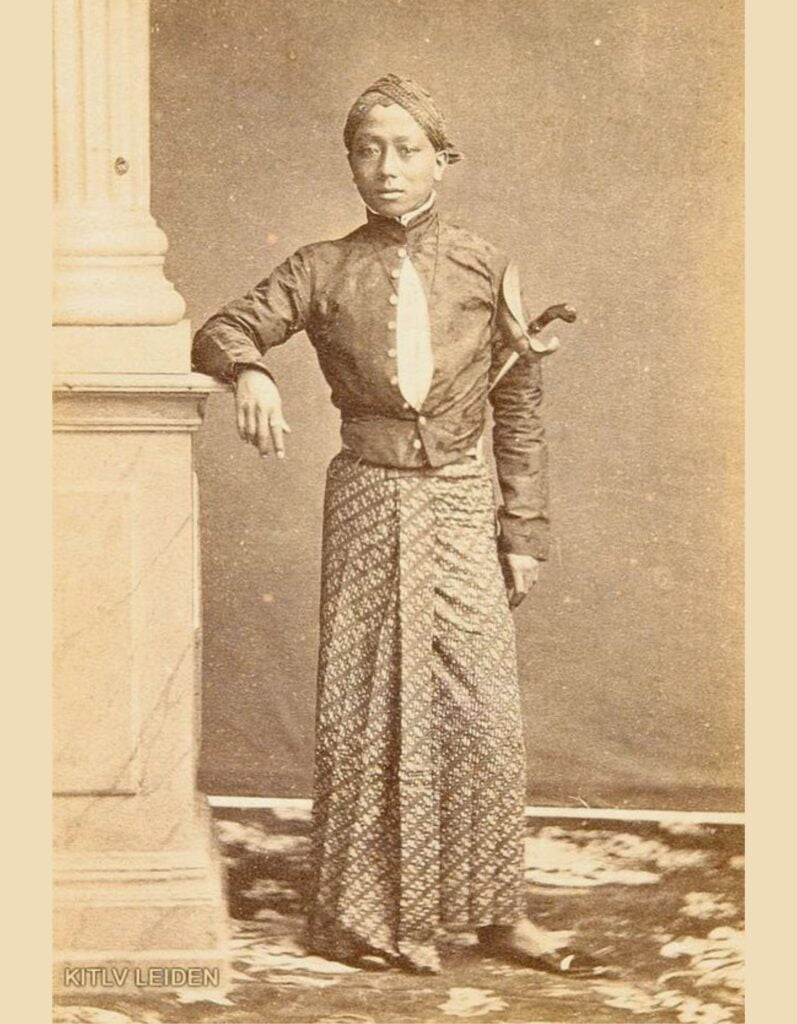
The word kris is derived from the old Javanese term “ngiris” which means “to slice” or “wedge”. The spelling of “kris” is more frequently used in the west, but “keris” is more popular in the dagger’s native lands, as exemplified by the late Bambang Harsrinuksmo’s popular book entitled Ensiklopedi Keris (Kris Encyclopedia). Thus, it is estimated that the origin of the word Keris comes from the Javanese sentence “Mlungker-mlungker kan bisa ngiris,” which means a winding object that can slice.
Keris represents history, born by history and created through history. It was first appeared in the land of Java. Keris is approximately introduced around 230 AD as a means of a defense system of Medangkamulan kingdom which is geographically located in the complex of Mount Lawu in the reign of the Buddhist Mahadeva. Reliefs depicting Keris have also been found in Borobudur Temple (8th century) and Prambanan Temple (9th century). So it is estimated that the Keris has existed since the 6th century. Until now, Keris is still often used as a complement to Javanese traditional costumes in several traditional ceremonies such as weddings and other traditional events. Besides, Keris is often used by some people as a display for houses and as a property in films, especially when they use historical theme.
Furthermore, Keris became the world heritage of UNESCO in November 25, 2005. According to UNESCO, the aesthetic value of Keris includes:
- “Dhapur” is a term that comes from the Javanese language to refer to the model or shape of the Keris. Each keris has a decoration or ornament that makes it different from one another.
- “Pamor” (the shiny nickelous pattern on Keris) comes from the results of forging which is done repeatedly on the metal of the keris and forms a unique decorative pattern. There are around 60 variants of pamor recognized today in traditional kris blades. Some examples of pamor include beras wutah, udan mas, kembang kacang, kembang pala and ladrang cendan.
- “Tangguh” is the process of interpreting a keris regarding its origin and age. Thus, the older the keris, the higher the aesthetic value it must be.
Although these weapons were were intended for use in war, they are now primarily displayed as historical artifacts and decorations.The number of weaponry in Nusantara is far more than these five. There were countless weapons, each with a distinctive feature.This traditional weapon is believed to have magical powers because in the former age, the process of making weapons required lengthy process with several ceremonies and a profound philosophical foundation. Therefore, let’s work together to gain knowledge about and commitment to the preservation of Indonesian cultural weaponry.
