
Uncategorized
Orang Laut: The Sriwijaya’s Forgotten Strength
May
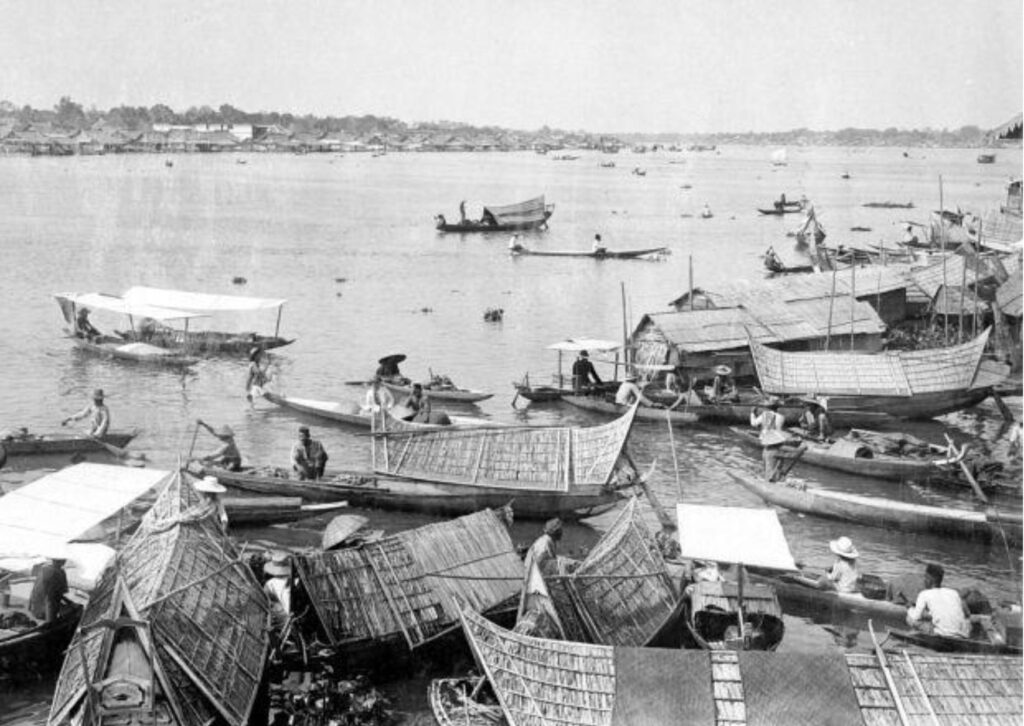
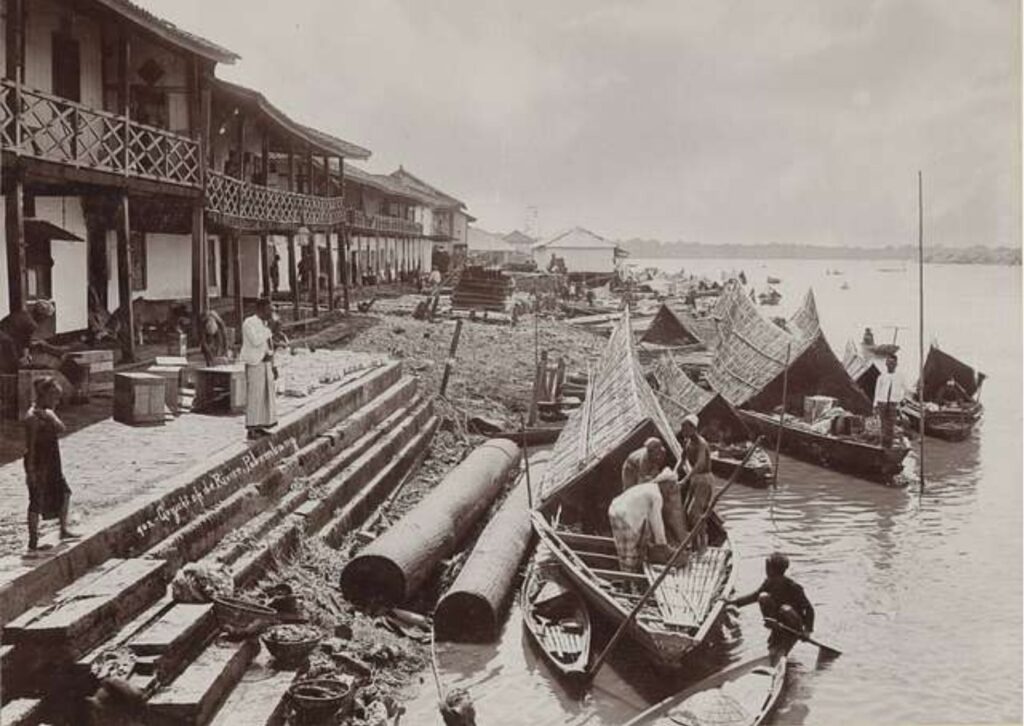
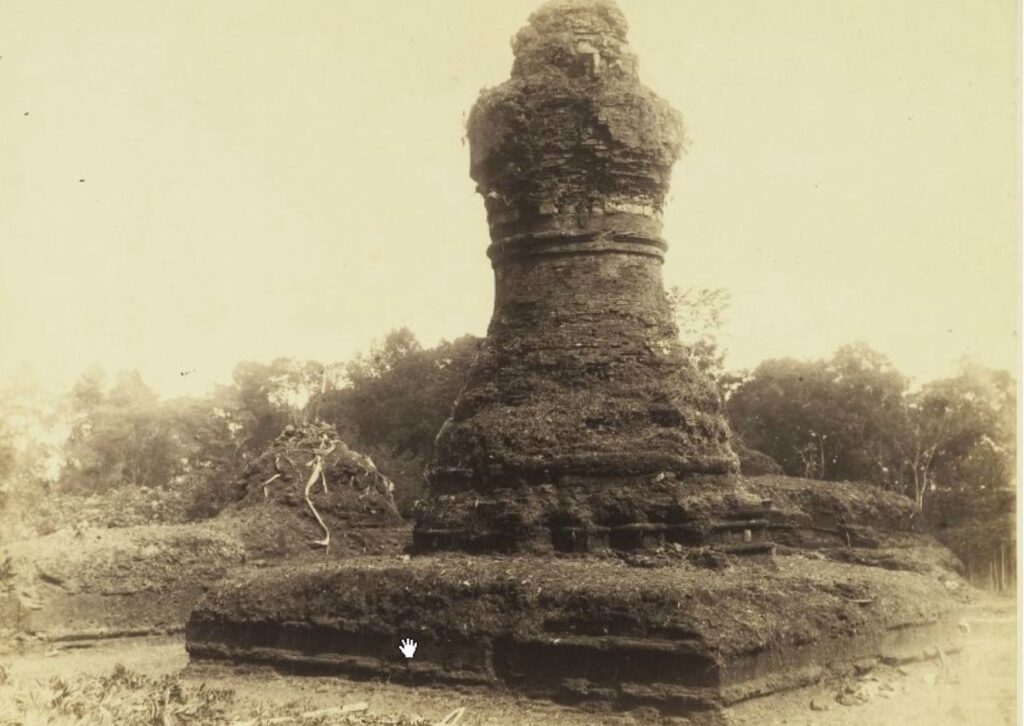
Sriwijaya was established in Palembang around the 7th century CE. Unlike other great kingdoms that built their power on agricultural land, large populations, and formidable land-based military forces, Sriwijaya turned to the sea, not by choice, but by geography. The kingdom came to control two critical chokepoints in Maritime Southeast Asia: the Strait of Malacca and the Strait of Sunda. Through a series of conquests and raids on rival ports, Sriwijaya consolidated its economic and military dominance for nearly 700 years.
At the prime of its power in the 9th century, Sriwijaya held sway over Sumatra, western Java, possibly western Borneo, and the Malay Peninsula as far north as the Kra Isthmus. In practical terms, nearly every major Asian trade route passed through waters that Sriwijaya could monitor and control.
Its economic model was straightforward: every vessel was required to stop, pay duties, and trade on Sriwijaya’s terms. Zhao Rukuo, a Song Dynasty official and historian writing in his 13th-century compendium Zhu Fan Zhi, recorded that Sriwijaya compelled foreign ships to dock at its ports. Ensuring compliance with this arrangement, however, required boots (or rather, oars) on the water. This is precisely where the Orang Laut enter the plot.
I. The Orang Laut: Heroes, Pirates, or Sriwijaya’s Indispensable Enforcers?
Who, exactly, were the Orang Laut? The answer depends rather heavily on whose account one consults.
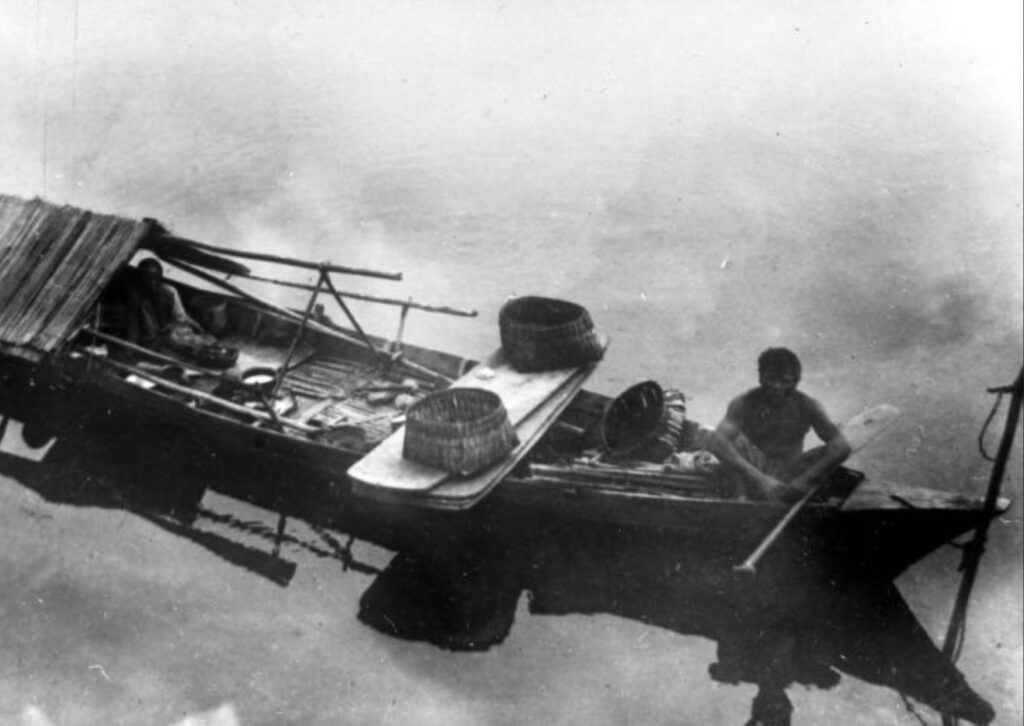
The bulk of historical records concerning the Orang Laut derive from colonial sources, which cast them as pirates, barbarians, and the uneducated fringes of civilised society. This characterisation, as scholars have long argued, tells us considerably more about the prejudices of its authors than about the Orang Laut themselves. They were, in truth, a community with a rich and layered past. Not merely brigands, but formidable seafarers and, by most accounts, a hospitable people. They were born, lived, and died aboard their vessels. They knew every current, every submerged reef, every narrow passage between the scattered islands along the eastern Sumatran coast and the Riau Archipelago. For them, the sea was not their occupation. It was their entire civilisation.
When we are talking about the genetic origin, Orang Laut are thought to be descendants of the first Austronesian settlers in Southeast Asia and have long been associated with the sea. They are not particularly a single unified tribe but rather a collection of sub-groups. Safe to say, when we talk about Orang Laut, we refer to the numerous tribes and groups inhabiting the islands and estuaries in the Riau Archipelago, the Pulau Tujuh Islands, the Batam Archipelago, and the surrounding coasts and offshore islands.
The famous maritime historian, Adrian B. Lapian, provides the most analytically useful lens through which to read the Orang Laut’s position within Sriwijaya’s power structure. In his dissertation — subsequently published as Orang Laut, Bajak Laut, Raja Laut: Sejarah Kawasan Laut Sulawesi Abad XIX (Komunitas Bambu, 2009). Lapian constructed a tripartite model of maritime society in the Indonesian archipelago. He argued that the Orang Laut (Sea People) necessarily operated in conjunction with the Bajak Laut (Sea Raiders), whilst the Raja Laut (the Sea Lord) required followers drawn from either the Orang Laut or the Bajak Laut.
These three variables (Orang Laut, Bajak Laut, and Raja Laut) did not exist in isolation. They formed an interlocking ecosystem of maritime power, each dependent upon the others. Within this framework, Sriwijaya occupied the position of Raja Laut, and it did so with considerable deliberateness, consciously constructing a system that drew upon all three tiers simultaneously.
In concrete terms, the Orang Laut served Sriwijaya across several overlapping layers of function:
First, as the empire’s eyes and ears at sea. The Orang Laut patrolled Sriwijaya’s waters, repelled genuinely rogue pirates, directed traders towards their employers’ ports, and maintained those ports’ dominance across the surrounding region. They also gathered sea products for the China trade, crewed the royal fleet, and provided transport for royal envoys and official correspondence.
Second, as instruments of economic coercion. Many Sriwijayan kings effectively “tamed” pirates and redeployed them as maritime patrols. According to Chinese merchant accounts, these sea tribes were greatly feared by international traders on account of their reputation as formidable warriors, dangerous on land and sea alike. Any ships and vessels bold enough to pass through the strait without docking at a Sriwijayan port could expect to be met with something rather less than a warm welcome.
Third, as a cost-effective reserve military force. The Orang Laut played a critical role in maintaining the security that allowed merchants to stop freely at Sriwijayan ports, which in turn generated the duties and taxes upon which the kingdom depended. As an unofficial force, they required no fixed salary of the sort demanded by a standing professional navy. Access, legitimacy, and a share of the proceeds were, it seems, sufficient.
II. The Dark Side: When Protection Becomes Predation
Here is the underlying problem. People ought to see Orang Laut (Sea People) and Bajak Laut (Sea Raiders) as two opposites. While in reality, it wasn’t that simple. Lapian didn’t see the line between them as completely rigid. In practice, the same person or group could shift between being Orang Laut and Bajak Laut depending on the situation and who was giving orders. So the Bajak Laut weren’t necessarily a separate ethnic group or community. They were often Orang Laut who had been weaponized by a Sea Lord for political or economic purposes.
For merchants who declined to play by Sriwijaya’s rules, traversing these waters could be a rather harrowing experience. Piracy in the region was not merely a lucrative way of life, it functioned as a critical political instrument. Rulers depended on pirate crews to maintain control. “Maintaining control,” in practice, meant that any ships or vessels attempting to bypass Sriwijayan ports risked being attacked, looted, or threatened into compliance. This was, by any reasonable definition, institutionalised extortion, dressed up in the language of port regulation.
The Arabic sources are particularly illuminating here. Written sources from Mas’udi (943 CE), Idrisi (1154 CE), and Ibn Said (13th century) all note that the South China Sea was dominated by sea people wielding poisoned arrows with the poison reportedly derived from ground stingray-tail powder.
The consequences of Sriwijaya’s overreach eventually caught up with it. The combination of exorbitant trade taxes and the persistent threat of piracy eventually prompted the Chola Empire to launch a military expedition in 1025 CE, systematically crushing Sriwijaya’s major ports and significantly diminishing its power and influence.
In other words, the piracy system did not merely succeed; it succeeded all too well, and in doing so, backfired and created rather hostile opposition. A monopoly too aggressively enforced, taxes too heavily imposed, and intimidation liberally applied: these were the very conditions that galvanised the coalition of forces that would ultimately dismantle the same structure.
One must also acknowledge a dimension that is easy to miss: the Orang Laut were not entirely free agents in this arrangement. They were not pirates by vocation or preference, they entered Sriwijaya’s system because it was, in many respects, the only viable option available to them. The sea was their home, and whoever controls the sea is their master.
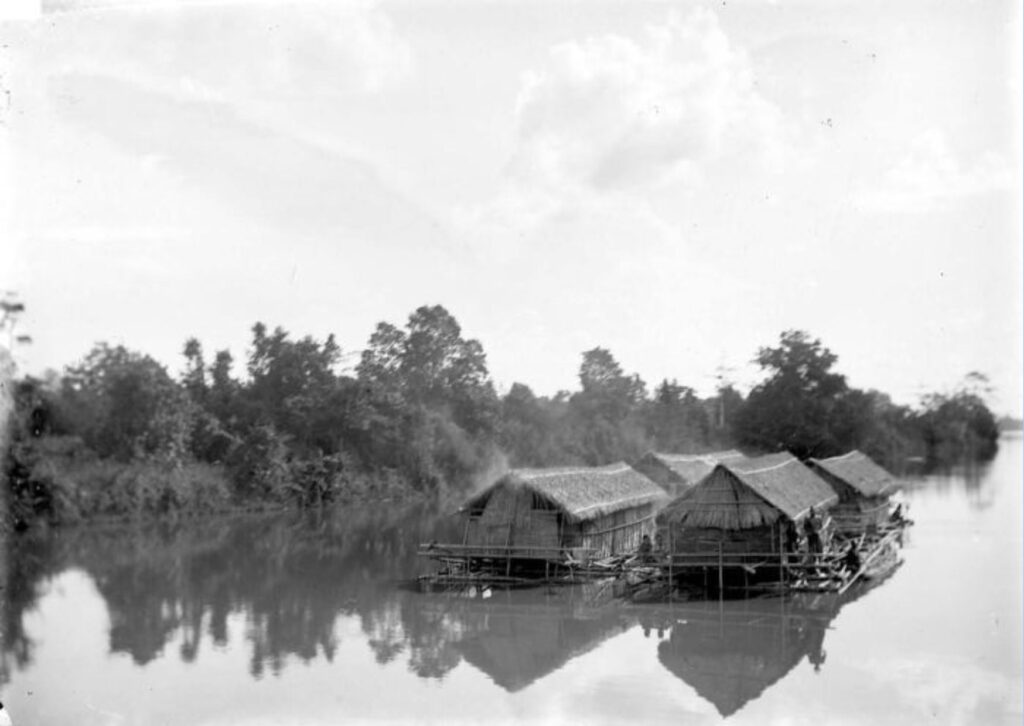
III. The Underappreciated Side: Orang Laut as Guardian of the Sea
Under the right conditions, Orang Laut under Sriwijaya’s command were not a threat to maritime trade. They were, ironically and paradoxically, its guardians and guarantors.
Sriwijaya understood a rather simple principle: Orang Laut who received a fair share of trade profits had little reason to become a threat. The logic, counterintuitively, runs in reverse from what one might expect. By bringing them into the system, Sriwijaya was effectively neutralising the single greatest potential danger in its own waters. Again, using the same logic in the previous paragraph, this is a clever way to prevent the Orang Laut from rebelling and becoming dangerous pirates.
In this respect, Sriwijaya perfected the art of thalassocracy — governance through the sea. Its fleet was efficient and formidable, and it relied upon the Orang Laut as a loyal and highly effective coast guard, whose deep familiarity with the tides and currents of the strait ensured the safety of its shipping lanes.
The Orang Laut played a crucial role in the rise of the maritime kingdoms of Sriwijaya, Malacca, and Johor alike. From the 7th to the 11th centuries, they deployed their navigational expertise in the service of Sriwijayan rulers, safeguarding commerce whilst simultaneously steering merchant traffic towards Sriwijayan ports.
The result? Sriwijaya came to dominate regional trade by mobilising the policing capabilities of these small but formidable sea communities, offering facilities and protection in return. For merchants who accepted the terms on offer, Sriwijaya’s waters were arguably safer than any ungoverned alternative. A sea lane with no master, after all, is a sea lane with no guarantees.
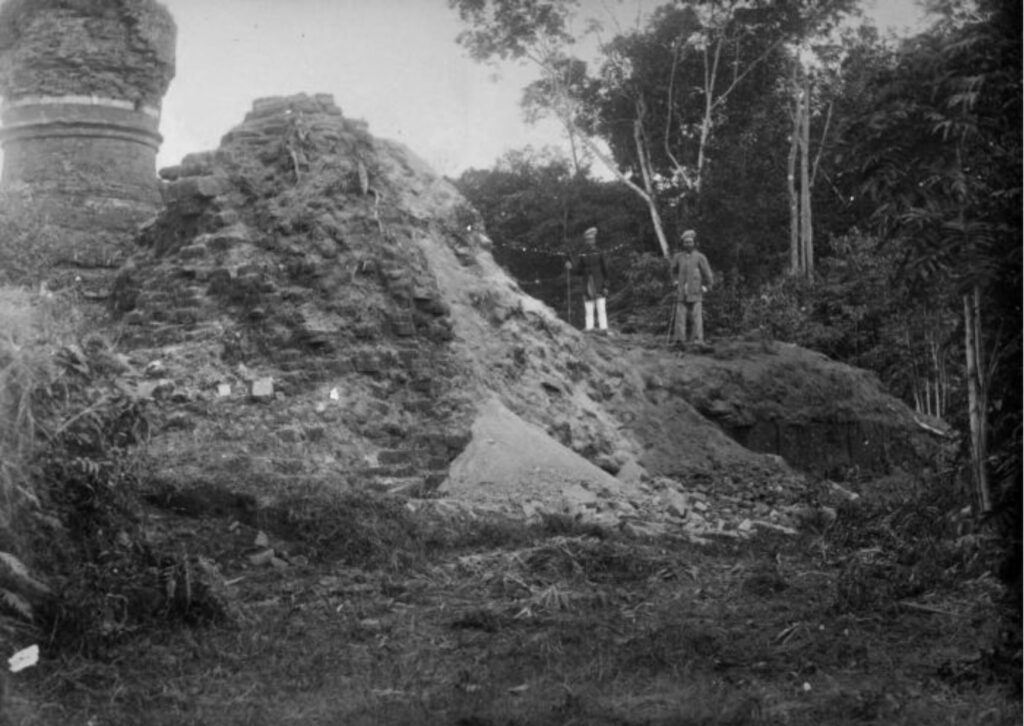
IV. The Unravelling, and What Remained
Every system of power carries within it the seeds of its own undoing. For Sriwijaya, those seeds were planted, most dramatically, in 1025 CE.
In that year, Rajendra Chola launched something unprecedented in Indian history: a naval expedition across the Bay of Bengal, striking directly at Sriwijayan ports. The objective was not territorial conquest. Frankly, the Cholas had no interest in colonising Southeast Asia. The aim was rather more surgical from their perspective: to break the monopoly. By targeting the very ports through which Sriwijaya regulated maritime traffic, the Cholas fatally weakened their ability to control the strait. And this attack happened not once but over and over for roughly 20 years.
If we look at this objectively, the Chola attack on Sriwijaya in 1025 was basically the world’s first trade war. Sriwijaya had total control over the Strait of Malacca and the Sunda Strait, which meant every ship sailing between India and China had no choice but to stop at their ports and pay up, or get attacked. This was a huge problem for Chola merchants who just wanted to trade freely with China. Add to that a political rivalry involving the Khmer Empire and Rajendra I’s hunger for fame and glory, and you have all the ingredients for conflict. So the Cholas struck fast and hard. Not to take over Sriwijaya’s land, but to destroy their ports, grab their wealth, and break their grip on the trade routes once and for all.
As the monopoly fractured, so did the patron-client relationship underpinning Sriwijaya’s arrangement with the Orang Laut. The Chola attack was the first blow. What followed compounded it: Chinese merchants began sailing directly through the strait without stopping at Sriwijayan ports (exactly like the Cholas planned), and new regional powers began contesting maritime influence. Sriwijaya was no longer the only game in town. The Orang Laut, whose loyalties had always been essentially transactional, began looking elsewhere.
When Sriwijaya was eventually merged by Majapahit (1356–1377), and Majapahit subsequently weakened, Palembang (which used to be Sriwijaya’s capital city) entered a rather grimly ironic new chapter: it became the base of Chinese pirate operations under the leadership of Leang Tao-Ming in the late 14th century. The irony is vivid. A city that had once been the nerve centre of piracy management became a pirate stronghold in its own right.
With the arrival of European colonial powers, the labelling of Orang Laut communities as pirates became increasingly aggressive, particularly after the fall of Malacca. Their loyalty to Malay sultans was read by the colonial powers as a straightforward nuisance, given their habit of raiding European merchant vessels in the Strait of Malacca, the Karimata Strait, and the South China Sea.
This is such a wake-up call that the term they hold as a “pirate” was never a stable identity. It was a label, one whose meaning shifted according to who held power at any given moment. When Sriwijaya was ascendant, the Orang Laut were called maritime enforcers. When the Europeans arrived, they became criminals.
So where are the Orang Laut now? They still exist, but their culture is slowly fading away. For a long time, their nomadic way of life was looked down upon by both the government and wider society, who saw it as primitive and backwards. Because of this pressure, many Orang Laut gradually blended into the broader Malay community, losing their unique language and traditions along the way. Today’s younger generation is also pulled toward city jobs and modern lifestyles, drifting further and further from the ways of their ancestors.
Nonetheless, you can still find them in places like Bintan Island, the Lingga Archipelago, and Batam Island in the Riau Islands of Indonesia. But very few of them still live the full nomadic sea life that defined their identity for centuries. Most now live in coastal villages on land, with only some occasionally returning to their boats during certain seasons, and others having left that life behind entirely. This shift was pushed even harder in the 1990s under Suharto’s government, which launched large-scale development programs that physically relocated Orang Laut communities from the sea to land settlements, all in the name of modernization.
Contributor: Aldiza Syifa Maura Pramudhita
References
- Lapian, A.B. (2009). Orang Laut, Bajak Laut, Raja Laut: Sejarah Kawasan Laut Sulawesi Abad XIX. Komunitas Bambu.
- Mulyanto, Heru. (2024). “Orang Laut – Bajak Laut – Raja Laut: Teori Adrian B. Lapian dalam Pola Masyarakat Maritim Kerajaan Sriwijaya.” Paradigma: Jurnal Kajian Budaya, Universitas Indonesia.
- Wolters, O.W. (1970). The Fall of Sriwijaya in Malay History. Cornell University Press.
- Amirell, S.E. (2019). Pirates of Empire: Colonisation and Maritime Violence in Southeast Asia. Cambridge University Press.
- Barnard, T.P. (2007). “Celates, Rayat-Laut, Pirates: The Orang Laut and Their Decline in History.” Journal of the Malaysian Branch of the Royal Asiatic Society, Vol. 80, No. 2.
- Sopher, D.E. (1977). The Sea Nomads. National Museum Singapore.
